What Support Exists After an HIV Diagnosis?
Peer support, clinic psychology, helplines and practical advice on benefits and immigration all exist and are underused. Here is what is available.
By Bareback Guide
9 Jun 2026

Modern treatment is usually one tablet a day, gets most people undetectable within a few months, and returns life expectancy to roughly normal. Undetectable means untransmittable, which is settled science rather than reassurance. These guides cover diagnosis, starting treatment, viral load and side effects.
Peer support, clinic psychology, helplines and practical advice on benefits and immigration all exist and are underused. Here is what is available.
With food, at the same moment as the drug it boosts, every single day. On its own it achieves nothing.
A standard dose, a reduced dose with better tolerability, and a single-tablet regimen that has been around for two decades.
One dose, one tablet, one product. There is nothing to adjust and nothing to choose between.
One booster dose used in every situation, and an older antiviral dose that nobody uses any more.
Diarrhoea and nausea early on, a rash risk from its sulfonamide component, and lipid changes over the longer term.
The drug every modern antiretroviral was measured against, and the trials that did the measuring are why it is no longer first choice.
A consistent picture of high suppression rates, very low resistance and good tolerability, measured mostly against dolutegravir.
A drug whose most important finding was about what it did to other drugs rather than what it did to HIV.
For well over a decade the most used HIV drug in the world, now largely superseded because of what it does to sleep and mood.
A modern integrase inhibitor available in exactly one product, which happens to be among the most prescribed regimens in the UK.
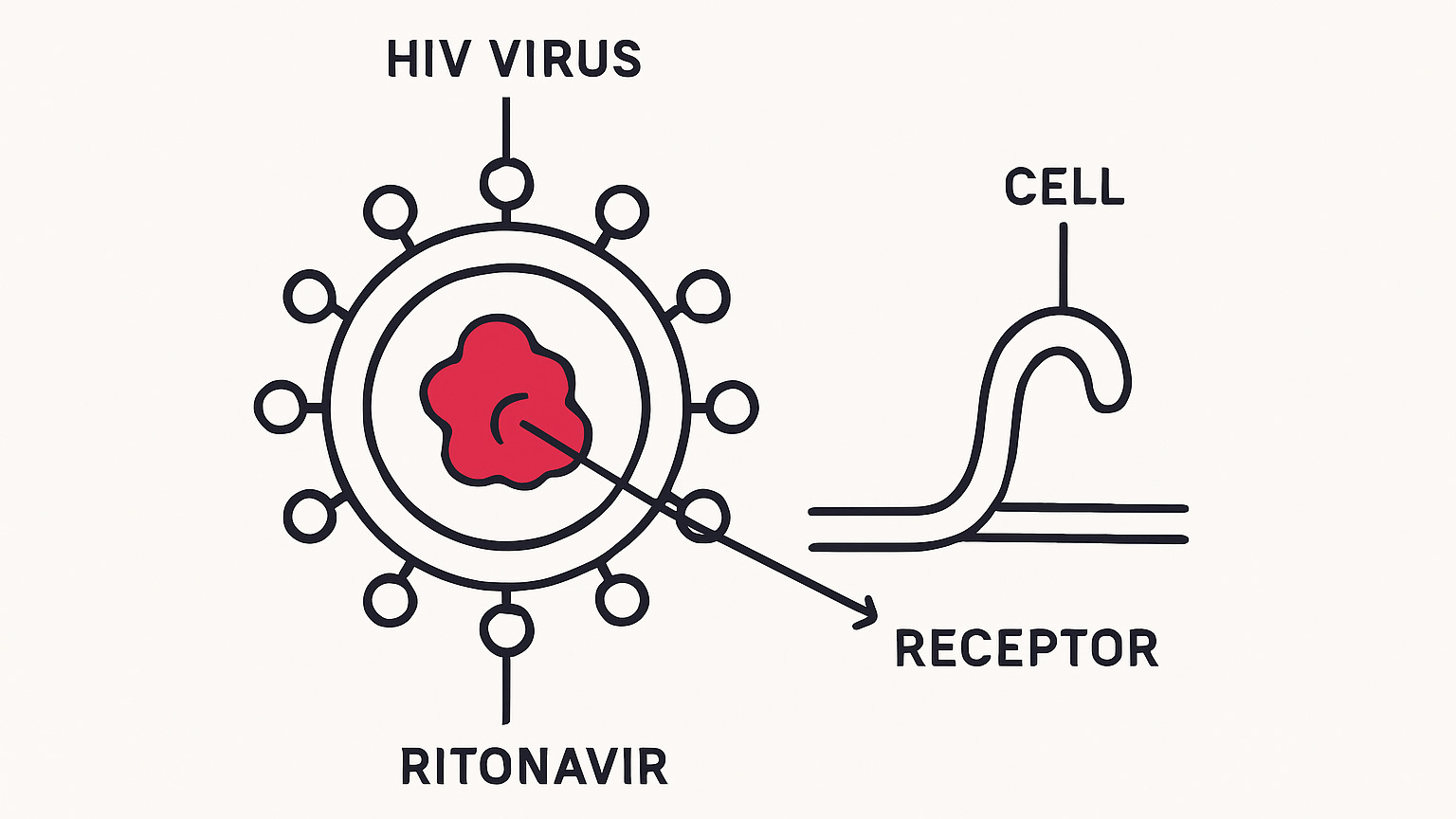
Developed as a protease inhibitor and now used almost entirely at low dose to slow the breakdown of other drugs.