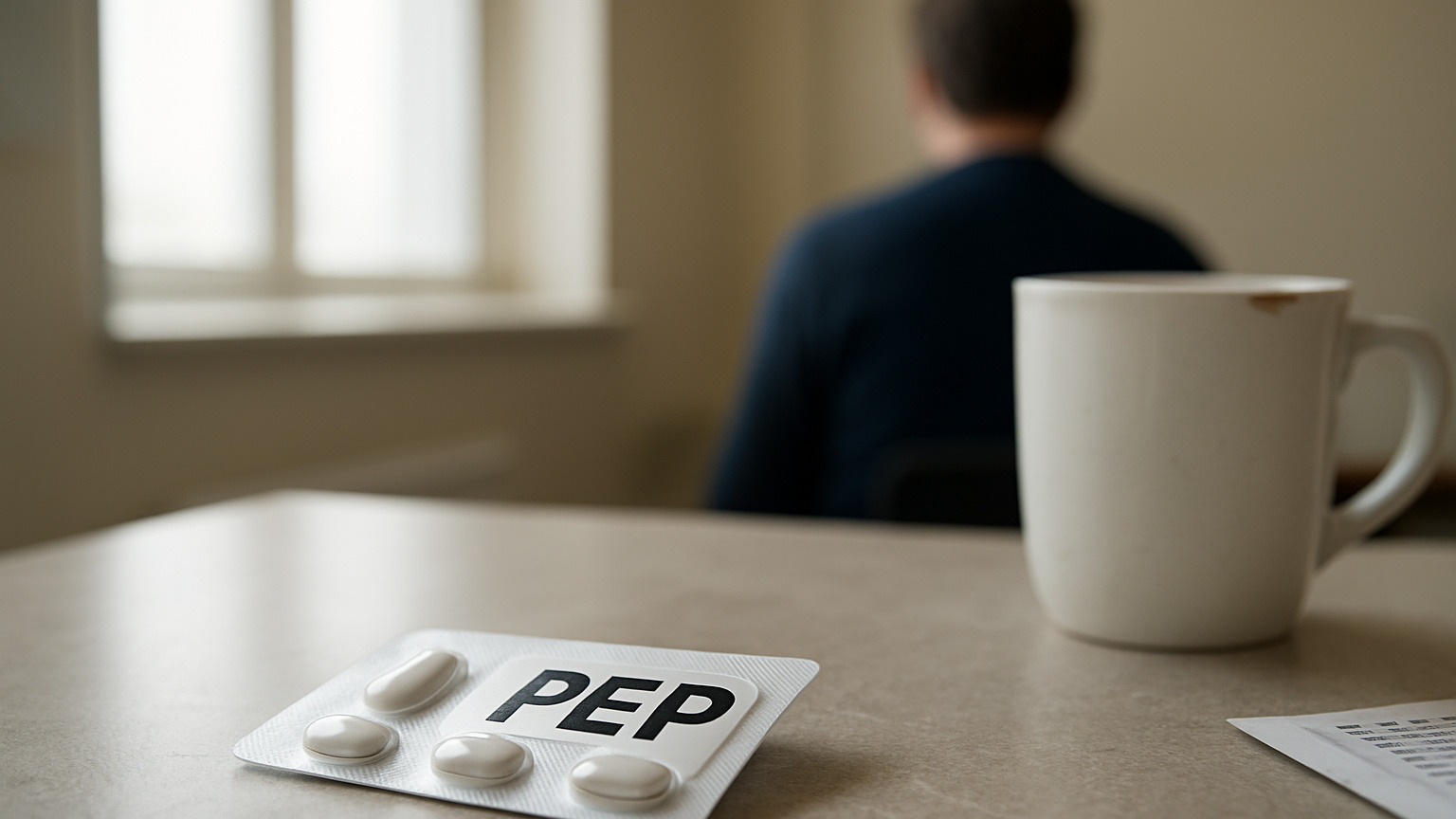
Is PEP Free and Confidential in the UK?
Free to everyone regardless of status, and held under the stricter confidentiality rules that apply to sexual health services.
By Bareback Guide
12 Aug 2026

PEP is a month of HIV medication started after a possible exposure, and the clock is the whole story: it works best within twenty-four hours, loses effect steadily, and is not given after seventy-two. These guides cover who qualifies, where to get it out of hours, and what the course involves.
Free to everyone regardless of status, and held under the stricter confidentiality rules that apply to sexual health services.
Hepatitis B has a genuine post-exposure route, and doxycycline is used for bacterial infections. Several others have nothing at all.
The end of a PEP course is the easiest moment to start PrEP, and needing PEP once is a strong indication it would help.
There is no limit on how many times you can have PEP, and needing it repeatedly is a reason for a different conversation rather than a refusal.
PEP is not given for every exposure, and a decision not to prescribe is usually clinical rather than a barrier. Here is what to do next.
Two follow-up HIV tests, a full screen and a conversation about what comes next. The second test is the one people skip.
PEP is less forgiving than PrEP because it is racing an infection that has already started. Here is what to do after a missed dose.
Modern regimens are much better tolerated than older ones, with nausea and tiredness the common complaints. Most people finish the course.
PEP substantially reduces risk but is not a guarantee, and the evidence base is different from the one behind PrEP.
A risk assessment, a baseline HIV test, blood tests and the first dose, usually within the same visit. Here is the sequence.
A&E provides PEP at any hour, and knowing how to ask makes the difference between being seen quickly and waiting all night.
Risk depends on the act, the other person's status and their viral load. Here is how clinicians weigh it and what tips the balance.