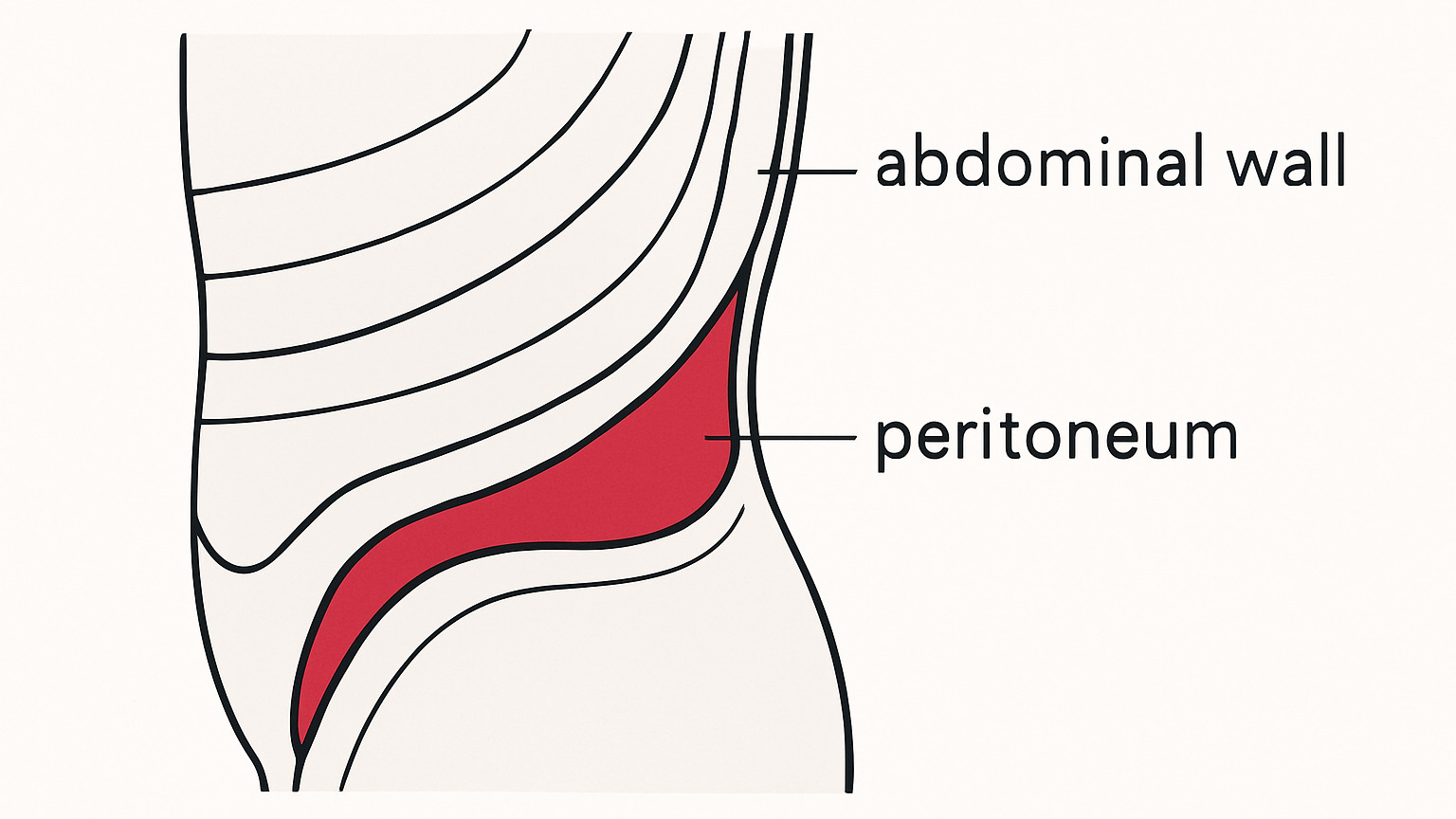
Perforation of the bowel wall is rare and it is the thing that kills people after sex involving size or depth. What makes it dangerous is almost always delay, because the early hours are survivable and the later ones considerably less so.
What are the warning signs?
Abdominal pain that is worsening rather than settling. An abdomen that feels rigid, board-like or is very tender to touch. Fever or shivering. Vomiting. Feeling faint or clammy. Pain referred to the tip of the shoulder. An inability to pass wind or open your bowels. Heavy rectal bleeding rather than streaks.
Why does shoulder pain matter?
Because it is a classic sign of irritation inside the abdomen, referred along a nerve. It seems unconnected, which is exactly why people discount it. Shoulder tip pain after anything involving the abdomen is worth taking seriously.
What is normal by comparison?
Generalised soreness that improves each day. A small amount of blood on tissue or on a glove. Aching in the hips and lower back. Feeling tender for two to four days. All of these settle. The distinguishing feature of a problem is that it gets worse rather than better.
What should you do?
Go to A&E immediately rather than waiting until morning. This is not a situation for NHS 111 or for sleeping on it. If someone else is with you and is unwell, take them or call an ambulance.
What should you tell them?
Exactly what happened, including what was inserted and how deep, and anything you have taken. Staff need this to assess it properly, it changes which investigations are done, and nobody will lecture you. An edited account produces worse care and wastes time you do not have.
What will happen there?
An examination, blood tests, and usually a scan. Treatment depends on what is found and may involve surgery. Caught early the outcome is generally good; caught late it becomes considerably more serious, which is the entire argument for going early.
Does drug use complicate it?
Substantially, because pain is the warning system and stimulants, ketamine, G and alcohol all blunt it. Someone who has taken any of these may not register pain until the situation is advanced. If you are with someone who has, and something seems wrong with them, do not wait for them to complain.
What about rectal bleeding on its own?
A streak on tissue after sex is common and usually a small tear or a haemorrhoid. What is not ordinary is bleeding that continues, bleeding in amounts rather than streaks, or bleeding with pain and fever. Persistent bleeding, even without pain, is worth a clinic appointment rather than being ignored.
What about pain with an urge to open your bowels?
A persistent urge with little result, alongside rectal pain and discharge, suggests proctitis from infection rather than injury. That needs a swab at a sexual health clinic rather than A&E, and it is treatable.
What about afterwards?
If a perforation is treated, recovery takes time and receptive sex will be off the table for a period your surgical team will specify. Follow that rather than guessing, since a repaired bowel needs longer than it feels like it does.
What is the rule worth keeping?
Improving means wait. Worsening means go. Fever, rigidity, vomiting or shoulder pain means go now.
What if the object is still there?
Go to A&E and say so immediately rather than attempting retrieval, which pushes things further and can cause damage. Retained objects are among the more common emergency presentations and are dealt with routinely. Anything inserted anally should have a flared base for exactly this reason.
How quickly can it develop?
Over hours rather than minutes, which is why the pattern matters more than the initial severity. Something that seemed manageable at midnight and is worse at three is the presentation to act on.
Does it always involve bleeding?
No, and assuming it would is a common error. Pain, rigidity and fever without any bleeding at all is entirely consistent with a serious problem.