
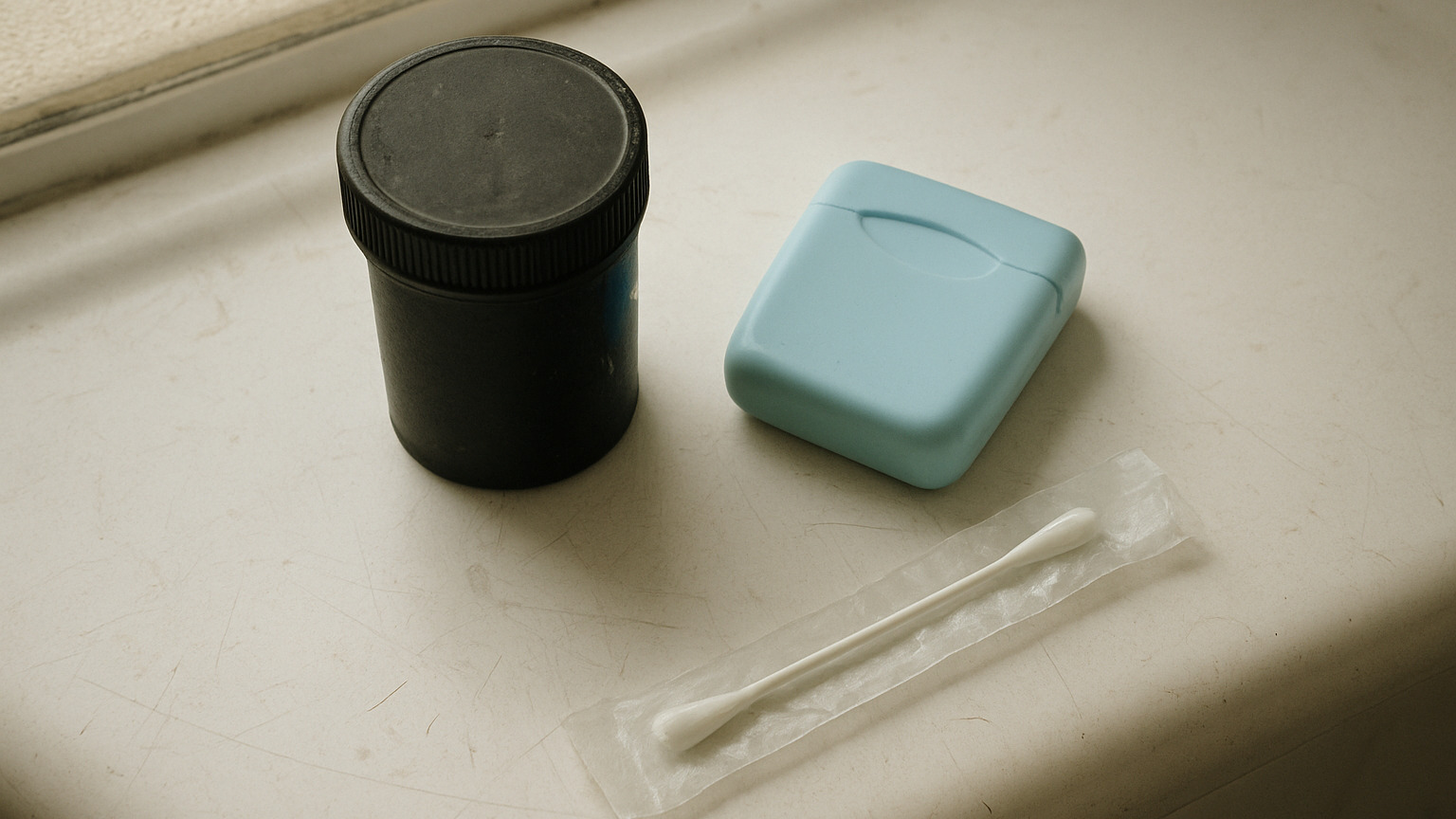
A standard sexual health screen in the UK covers four infections: chlamydia, gonorrhoea, HIV and syphilis. That is less than most people picture when they say they had everything tested. Knowing what is missing is the point of this page, because several common infections are simply not part of routine screening and will not be found unless you ask or have symptoms.
What is included as standard
Chlamydia and gonorrhoea, tested by nucleic acid amplification on a first-catch urine sample and, if you request them, self-taken rectal and throat swabs. HIV and syphilis, tested from a blood sample. That is the core screen, and it is what a postal kit or a routine clinic visit delivers.
What is usually added on request or by circumstance
Hepatitis B and hepatitis C are included at least annually in most services for men who have sex with men, and should be requested if you inject drugs, fist, have partners living with HIV or had a session where bleeding occurred. Mycoplasma genitalium is tested where symptoms of urethritis persist rather than routinely, partly because treating asymptomatic carriage drives resistance. Lymphogranuloma venereum testing is triggered by significant rectal symptoms or a positive rectal chlamydia result.
Why is herpes not included?
Because the available blood tests cannot tell you where the infection is, when you acquired it, or whether you will ever have symptoms, and HSV-1 antibodies are so widespread in the general population that a positive result is largely uninformative. UK services therefore test by swabbing a lesion while it is visible, which gives a definite answer about that lesion. If you get an outbreak, the useful thing is to get seen while something is there to swab rather than to request a blood test afterwards.
Why is HPV not included?
There is no routine HPV test for men in the UK. Warts are diagnosed by looking at them. Anal cytology screening for high-risk HPV changes is offered in some specialist services, particularly for people living with HIV, but it is not standard. The practical response to HPV is vaccination, which is free at sexual health clinics for men who have sex with men and prevents the strains responsible for most warts and most anal cancers.
What about the things people assume are covered?
Trichomonas is not routinely tested for in men in most services. Shigella needs a stool sample and is tested for when someone has diarrhoea, not as part of a screen. Mpox is diagnosed by swabbing a lesion, not by screening. Ureaplasma is sometimes tested privately and its clinical significance is debated, which is why NHS services generally do not look for it. A negative standard screen does not exclude any of these.
How do you get a genuinely full picture?
Ask for three-site chlamydia and gonorrhoea, HIV and syphilis bloods, and hepatitis B and C at least annually. Mention any symptom, however minor, because symptoms are what unlock the additional tests. Ask about hepatitis A and B, HPV and mpox vaccination at the same visit, since prevention covers several of the things screening does not.
What about private clinics offering more?
Private panels frequently include organisms of uncertain significance, and a positive result for something that was never going to cause you harm leads to antibiotics you did not need. More tests is not automatically better screening. The NHS panel reflects what is worth finding and treating, and adding to it makes sense when there is a reason rather than as a default.
The short version
Standard means four infections and only the sites you sampled. Everything else is either request-based, symptom-triggered or prevented by vaccination rather than found by screening.
How do you find out what your service tested?
Ask for the list, either at the appointment or when the result comes through. Most services will tell you exactly which organisms were looked for and from which sites, and it is worth knowing rather than assuming, particularly if you used an online pathway where the swabs you received depended on how you answered a form months ago. A screen you cannot describe is a screen you cannot rely on.


