The honest starting point is that most rectal sexually transmitted infections cause nothing at all. Rectal gonorrhoea and rectal chlamydia are frequently found on routine screening in men who felt entirely normal. When symptoms do occur, they are non-specific enough that people reasonably attribute them to haemorrhoids, a fissure or simply a rough night, and often they are right. The difficulty is telling the two apart.
What does rectal infection feel like?
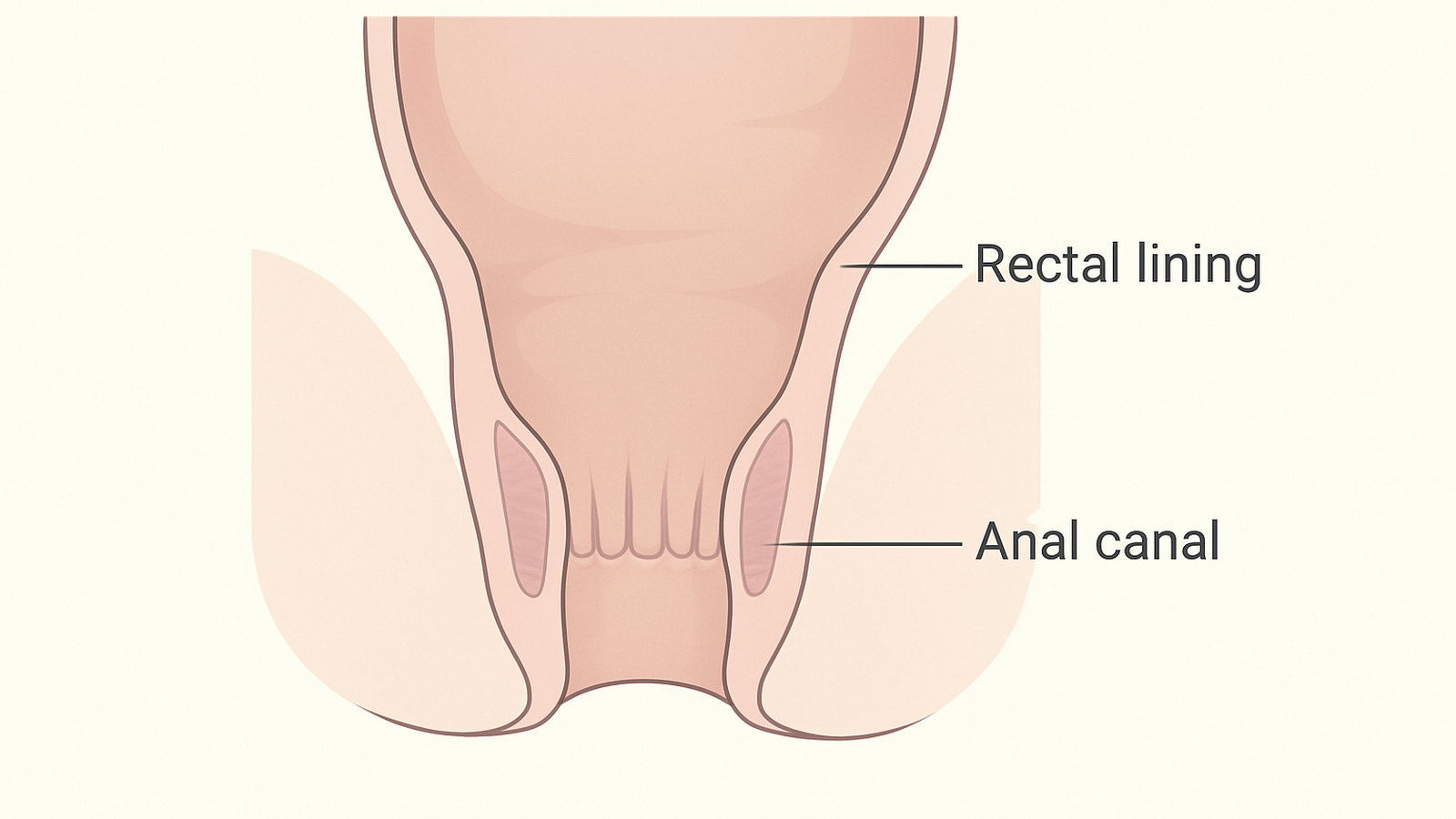
The medical term for inflammation of the rectal lining is proctitis, and the symptom set is fairly consistent regardless of which organism causes it. Discharge of mucus or pus from the anus, sometimes noticed as staining on underwear. Rectal pain or a deep ache. Blood on the tissue or on the surface of stool. Tenesmus, which is the persistent sensation of needing to open your bowels with little or nothing produced, and which people often describe as the most distinctive and unpleasant part. Cramping, urgency or a change in bowel habit can accompany it.
How do you distinguish it from haemorrhoids or a fissure?
Some rules of thumb help. A fissure produces sharp, tearing pain at the moment of passing stool and bright blood on the paper, and the pain is clearly located at the anal opening rather than deeper inside. Haemorrhoids cause itching, a lump you can feel and painless bright bleeding, and rarely cause discharge. Infection more often produces mucus or pus, a deeper and more constant ache, tenesmus, and symptoms that build over days rather than starting abruptly with one painful bowel movement. Fever, feeling generally unwell or swollen glands in the groin point firmly towards infection.
Which infections cause it?
Gonorrhoea and chlamydia are the most common. Herpes causes proctitis too, typically with severe pain that is out of proportion to what is visible, and sometimes ulcers around or inside the anus. Syphilis can produce a painless rectal chancre that is missed entirely. Mpox has caused a great deal of proctitis since 2022, often with lesions nearby. Shigella, which is spread by oral to anal contact rather than being a classical STI, causes severe diarrhoea and cramping and has circulated widely in sexual networks.
What is LGV and why does it matter here?
Lymphogranuloma venereum is an invasive strain of chlamydia that produces much more aggressive proctitis than ordinary rectal chlamydia: significant pain, purulent or bloody discharge, ulceration and sometimes swollen lymph nodes. It is far more common in men who have sex with men than in the general population, and it needs three weeks of doxycycline rather than the standard seven days. If your rectal symptoms are severe, say so explicitly at the clinic and ask whether LGV testing is being done, because a standard chlamydia result alone will not distinguish it.
How is it tested for?
A rectal swab, which in most UK clinics and postal kits you can insert yourself a few centimetres into the anus and rotate briefly. It is quick and not painful. A urine sample will not detect rectal infection, which is the single most common reason these infections are missed. If you have receptive anal sex, a rectal swab belongs in every screen you have.
Does HIV risk change with proctitis?
Yes, and substantially. Inflammation in the rectal lining brings immune cells to the surface and disrupts the mucosal barrier, which increases the chance of acquiring HIV during receptive anal sex. This is one of the strongest practical arguments for prompt testing and treatment, and for staying on PrEP if you are using it.
When should you not wait?
Book an urgent appointment for severe rectal pain, significant bleeding, fever alongside rectal symptoms, or symptoms that are worsening rather than settling over a few days. Otherwise, a routine clinic appointment with an honest description of what you are experiencing will get the right swabs taken. Vague rectal symptoms after condomless sex are worth checking rather than assuming, particularly since the treatments differ and getting the wrong one wastes three weeks.