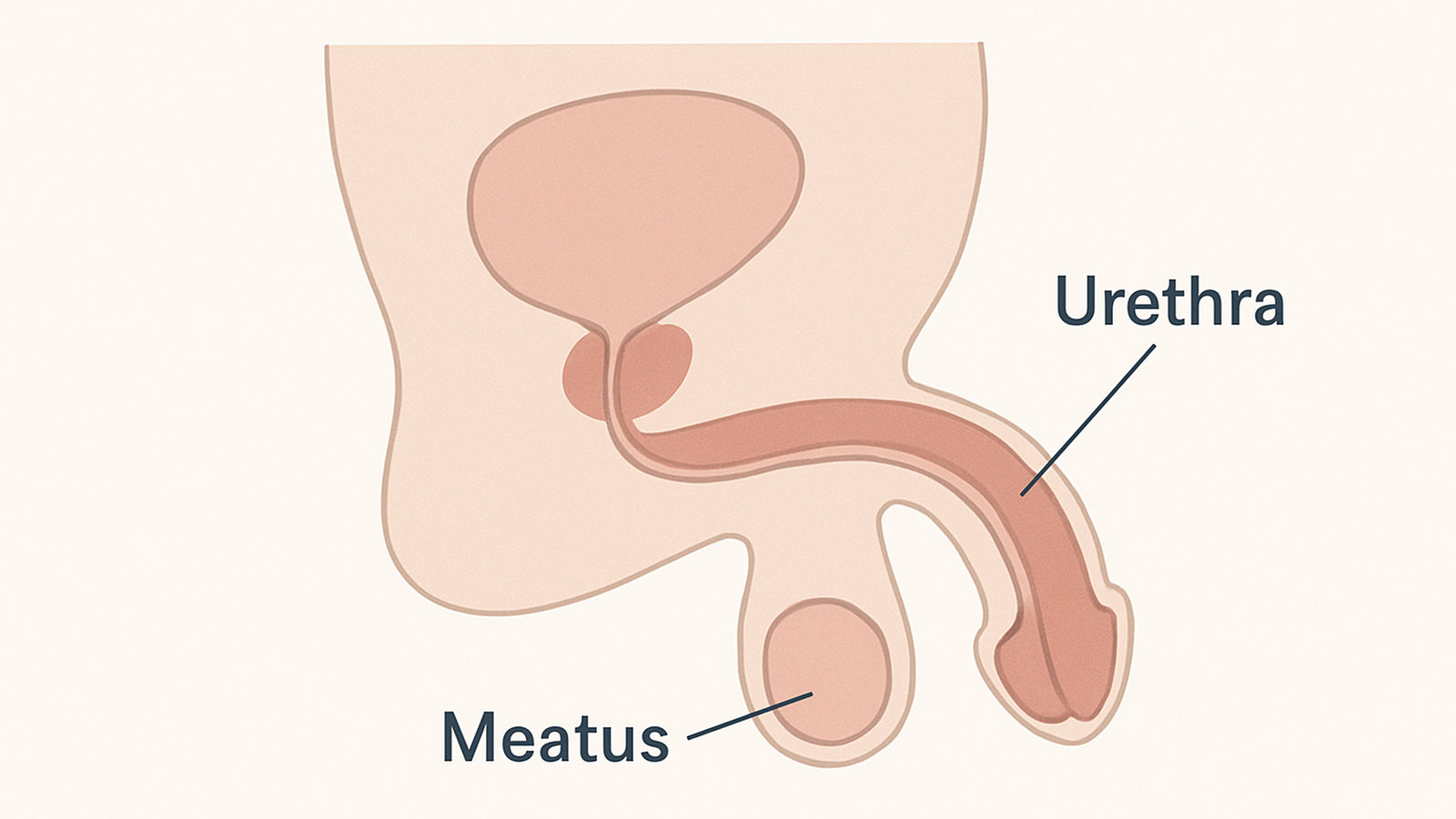
Gonorrhoea in the urethra announces itself faster than almost any other sexually transmitted infection. Where chlamydia can sit quietly for a month, urethral gonorrhoea tends to produce a visible discharge and a burning sensation when passing urine within two to fourteen days of exposure, and most men who develop symptoms at all notice them inside the first week. That speed is the single most useful thing to know about it.
What does the discharge look like?
The classic presentation is a thick discharge from the tip of the penis, usually white, yellow or green, and heavy enough to mark underwear rather than appearing only as a bead first thing in the morning. It is generally more copious than the thin, cloudy discharge associated with chlamydia and other causes of non-gonococcal urethritis. In practice the two overlap enough that no clinician will diagnose you on appearance alone, and a urine sample or urethral swab settles the question properly.
Which other symptoms turn up alongside it?
The common companions are pain or burning when you urinate, needing to go more often, and soreness or irritation at the opening of the urethra. A smaller number of men notice pain or swelling in one testicle, which suggests the infection has reached the epididymis. That version needs treating promptly rather than at the end of the week, because untreated epididymitis can cause lasting damage. Fever is unusual with straightforward urethral gonorrhoea and, if it appears, moves the situation into territory that warrants same-day attention.
Why do so many infections produce nothing at all?
Roughly one in ten men with urethral gonorrhoea has no symptoms whatsoever, which is a small enough proportion that the urethra is the one site where symptoms are moderately reliable. Rectal and pharyngeal infections are an entirely different matter. The great majority of throat gonorrhoea causes nothing recognisable, and rectal gonorrhoea is silent in most cases too, or produces only vague discomfort that is easy to attribute to a rough session. Someone waiting for a sign before testing will miss the majority of infections at those sites.
How soon can you test after a possible exposure?
Modern nucleic acid amplification tests are sensitive enough to pick up gonorrhoea about two weeks after exposure, and many clinics will test sooner if you have symptoms because a positive result at that stage is still worth acting on. If you have discharge or pain now, do not wait for the fortnight to elapse. Walk into a sexual health clinic and say what is happening. Symptomatic men are usually seen quickly and often treated on the same visit.
Which sites should be swabbed?
A urine sample alone covers the urethra and nothing else. If you have had receptive anal sex or given oral sex, ask for a rectal swab and a throat swab as well. This is a routine request and clinic staff will not be surprised by it. Three-site screening is the standard offer for men who have sex with men in UK sexual health services, and single-site testing is the most common reason an infection gets missed entirely.
What happens if it is confirmed?
Treatment in the UK is a single intramuscular injection of ceftriaxone, given in the buttock or thigh. Gonorrhoea has developed resistance to a long list of oral antibiotics, which is why the injection has become the default rather than tablets. Because resistance keeps evolving, clinics usually arrange a test of cure a couple of weeks afterwards to confirm the infection has actually cleared. Attend that appointment even if you feel completely normal.
What should you do about recent partners?
Anyone you have had sex with in the preceding weeks should be told so they can test. Clinics offer partner notification and will do this anonymously on your behalf if you prefer, meaning your name is never attached to the message. This matters more with gonorrhoea than most infections, because so many partners will have no symptoms to prompt them and would otherwise pass it on unknowingly.
When symptoms are the wrong thing to rely on
Gonorrhoea is worth understanding precisely because it is the exception that tempts people into a bad general rule. Fast, obvious urethral symptoms can create the impression that infections announce themselves. They frequently do not. Regular screening every three months while you are having condomless sex with new partners catches the silent infections that no amount of self-examination ever will.