
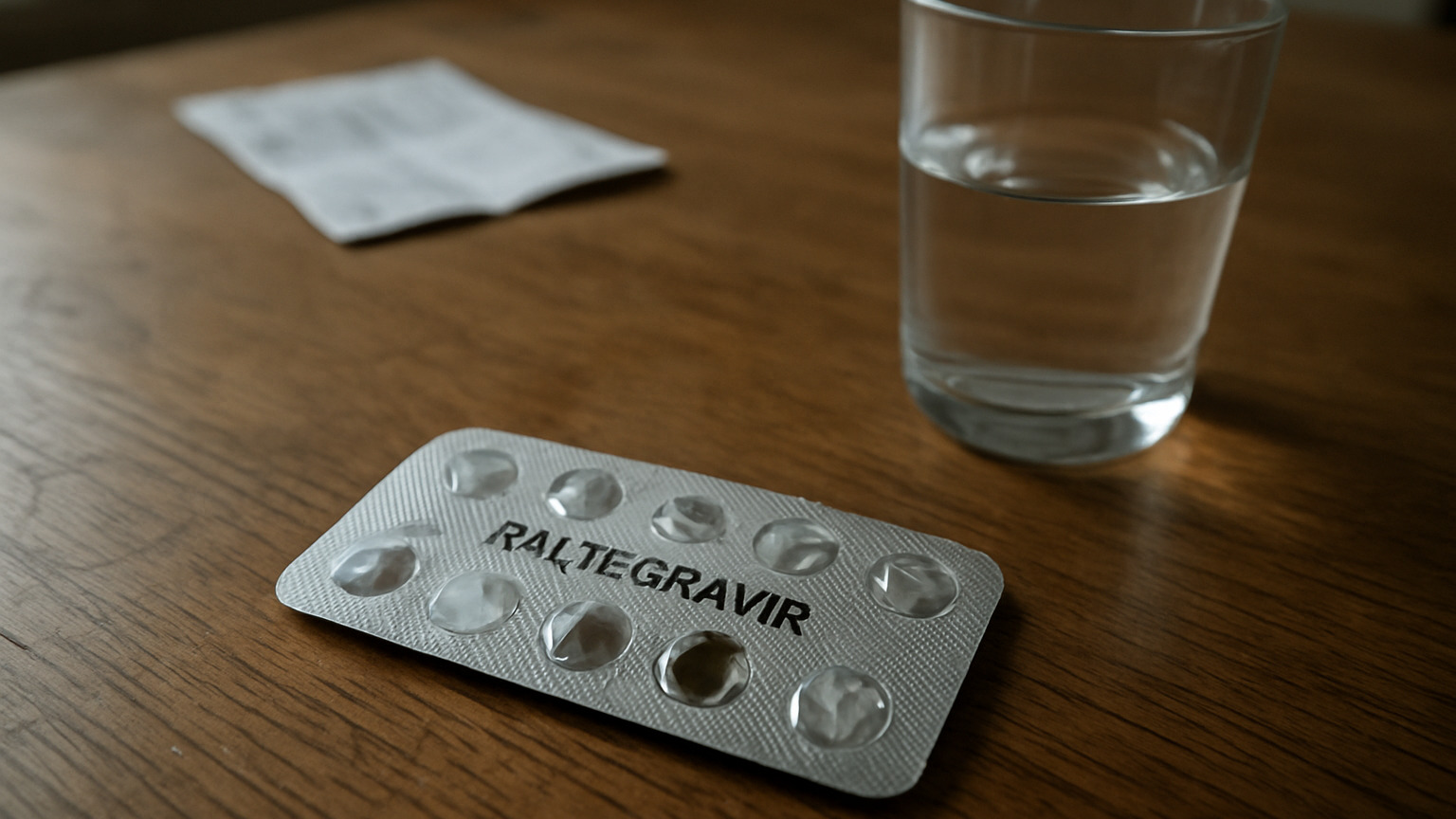
Raltegravir was the first integrase inhibitor to reach clinical use and it opened a class that now dominates HIV treatment. It has since been overtaken for first-line use, and it retains specific advantages that keep it in regular circulation.
What kind of drug is it?
An integrase strand transfer inhibitor. When it was licensed in 2007 it was the first drug in more than a decade to attack an entirely new step in the viral life cycle, which made it immediately valuable for people with resistance to everything else.
How does it work?
HIV must insert a DNA copy of its genome into the chromosomes of the cell it has entered, using an enzyme called integrase. Raltegravir binds to that enzyme and blocks the strand transfer step where the insertion occurs.
What happens then?
The viral DNA remains loose in the cell, unable to direct the production of new virus, and is eventually degraded. Because integration is essential and irreversible, blocking it stops the infection establishing itself in that cell.
Why was it significant?
Because before it, everyone with resistance to nucleosides, non-nucleosides and protease inhibitors had run out of options. A new class meant a fully active drug for people who had none, and outcomes in that group changed substantially.
What is it used for now?
HIV treatment as part of a combination. It is particularly used in pregnancy, in people taking tuberculosis treatment, in people on complex medication for other conditions, and in post-exposure prophylaxis.
Why those situations specifically?
Because its interaction profile is cleaner than almost any other antiretroviral. It is not handled by the liver enzyme system that causes most trouble, so it neither raises nor lowers the levels of most other medicines.
Does it need a booster?
No. It maintains adequate levels without anything to slow its breakdown, which avoids the extensive interaction problems that ritonavir and cobicistat create.
What is its main drawback?
Twice-daily dosing in the original formulation, and a lower resistance barrier than dolutegravir or bictegravir. Both are real limitations rather than technicalities.
Is there a once-daily option?
Yes. A higher-dose formulation taken once daily as two tablets was developed and studied successfully. It is not interchangeable with the twice-daily tablets, which matters practically.
How quickly does it work?
Rapidly. Raltegravir was notable on introduction for how fast it reduced viral load, and that speed is one reason it is useful when someone presents late in pregnancy with a high viral load.
Does it cover hepatitis B?
No. Regimens containing it may, through a lamivudine or tenofovir component. Hepatitis B status is checked before any regimen is chosen.
Is it available in a single tablet?
No, and this is its main practical disadvantage. It is not co-formulated with any backbone, so it always means taking at least two products.
How long has it been available?
Since 2007, so there is nearly two decades of clinical experience. Its properties are thoroughly characterised and no late surprises have emerged.
Is it available generically?
Generic availability has been developing as patents expire, which affects cost to the NHS rather than to you.
Where does it sit against the alternatives?
Behind dolutegravir and bictegravir on convenience and resistance barrier, ahead of both on interaction profile. The fit depends on what else you take and whether twice-daily dosing suits you.


