
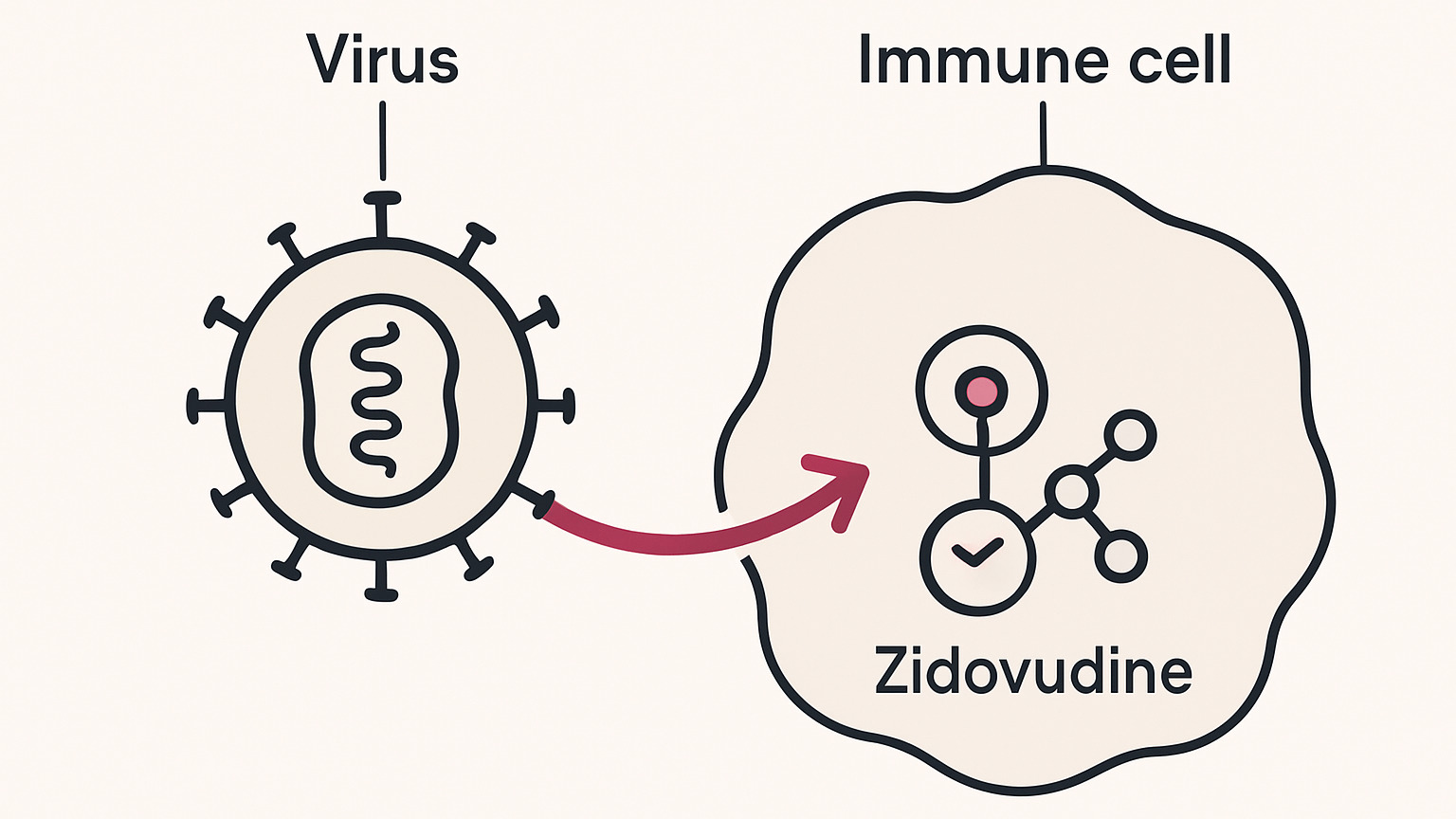
Zidovudine's research history is the early history of HIV treatment. Three findings from it still shape practice today.
What did the first trial show?
A placebo-controlled study in people with advanced HIV disease found substantially fewer deaths in the zidovudine group over a few months. The trial was stopped early on ethical grounds and the drug was licensed rapidly.
Was that finding durable?
No. The benefit faded over longer follow-up as resistance emerged. The Concorde study, a large European trial, found that early zidovudine monotherapy in people without symptoms did not improve survival over the longer term.
Why did that matter?
Because it demonstrated that a single drug could not control HIV. That lesson is the foundation of combination therapy, and it is why nobody is ever prescribed a single antiretroviral today.
What did ACTG 076 establish?
That zidovudine given during pregnancy, labour and to the newborn substantially reduced transmission from mother to child. It was among the most consequential findings in HIV medicine and it saved an enormous number of lives.
Does that protocol still apply?
Not in its original form, since modern combination therapy achieving an undetectable viral load has largely replaced it. Zidovudine retains a role in some situations, particularly where the viral load is not fully suppressed at delivery.
What did the combination era show?
Trials in the mid-1990s combining zidovudine with lamivudine and a protease inhibitor produced durable suppression and transformed outcomes. Zidovudine was a component of that transformation rather than a bystander.
What did the toxicity research find?
That zidovudine interferes with the enzyme that copies DNA in mitochondria, the cell's energy-producing structures. This explains the anaemia, the muscle problems, the fat loss and the lactic acidosis seen in people treated in the 1990s.
Why is that significant?
Because understanding the mechanism allowed newer nucleosides to be designed with far less mitochondrial effect. The improvement in tolerability between zidovudine and modern drugs is one of the largest in HIV medicine.
What did comparative trials show?
Studies against tenofovir and abacavir consistently found similar virological effectiveness with substantially better tolerability and fewer discontinuations on the newer drugs. That evidence removed zidovudine from first-line use.
What about lipoatrophy?
Cohort studies documented loss of fat from the face, limbs and buttocks in people on thymidine analogues, sometimes irreversible. It was disfiguring, identifying, and a major cause of distress, and it largely disappeared with newer regimens.
What about resistance?
Zidovudine resistance develops through accumulated mutations known as thymidine analogue mutations, which affect susceptibility to several other nucleosides. Their pattern is well characterised and informs how salvage regimens are built.
Does it retain any activity advantage?
In specific resistance patterns. The M184V mutation, which confers lamivudine resistance, increases susceptibility to zidovudine, which is occasionally exploited in complex regimens.
What is still being studied?
Very little in adults. Ongoing interest concerns its remaining role in preventing transmission during birth and its place in settings where alternatives are limited.
What does real-world data show?
Decades of use, a well-documented toxicity profile, and a clear pattern of replacement by better tolerated drugs wherever those became available.
Where can you read the evidence yourself?
NAM aidsmap summarises HIV research reliably, and the British HIV Association publishes the guidelines UK clinicians follow. Both are freely available and considerably more useful than a general search.


