
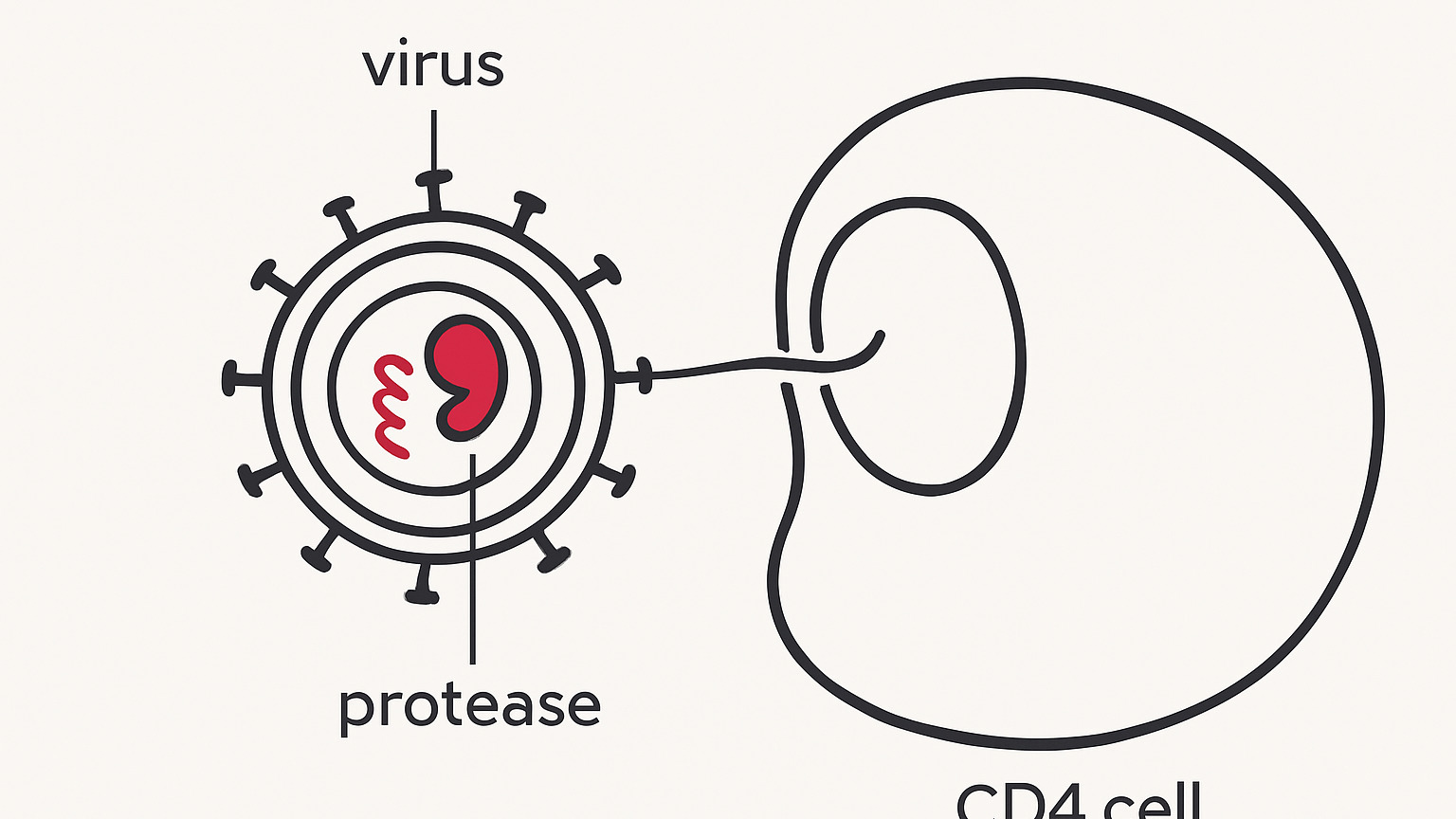
Atazanavir has a substantial evidence base built over two decades. The trials establish that it works well; the more recent comparisons explain why it is no longer usually chosen first.
What established it in treatment?
Registration studies in the early 2000s showed boosted atazanavir achieving durable viral suppression comparable to other protease inhibitors then in use, with once-daily dosing and a more favourable lipid profile than some alternatives. That combination made it attractive at the time.
What did the CASTLE study show?
It compared boosted atazanavir with boosted lopinavir, then a standard, and found comparable virological outcomes with better tolerability and lipid effects for atazanavir. This helped establish it as a preferred protease inhibitor for a period.
How does it compare with integrase inhibitors?
Studies comparing boosted protease inhibitors with integrase inhibitors have consistently favoured the newer class on tolerability, speed of viral suppression and discontinuation rates, without a meaningful difference in eventual effectiveness. That is the evidence behind current first-line guidance.
What does the resistance data show?
A high barrier, as expected of boosted protease inhibitors. Treatment-emergent resistance to atazanavir is uncommon even in people who do not suppress fully, which is one of the strongest arguments for the class in specific situations.
What is known about the bilirubin effect?
Well characterised and consistently benign. Trials documented raised bilirubin in a substantial minority, with visible jaundice in fewer, and no association with liver injury. Discontinuation for cosmetic reasons was recorded, which is a real-world finding rather than a safety one.
What about kidney stones?
Cohort studies have identified an increased incidence of nephrolithiasis and cholelithiasis with long-term use, appearing after several years in some people. This is one of the recognised long-term considerations and is not common.
What about lipids?
Better than older protease inhibitors and generally worse than integrase inhibitors. Where cardiovascular risk is a concern, this factors into the comparison rather than ruling anything out.
What has the unboosted data shown?
Unboosted atazanavir was studied and produces lower drug levels, with a correspondingly lower barrier to resistance. It is rarely used, and boosted dosing is the standard approach.
What about pregnancy?
Studies have found levels falling in the later stages of pregnancy, which is why dosing may be adjusted. The bilirubin effect can also appear in the newborn, which is monitored rather than being a reason to avoid it.
What is still being studied?
Relatively little, since attention has moved to newer agents. Ongoing cohort work continues to track long-term outcomes in people who have been on it for many years.
Where can you read the evidence yourself?
NAM aidsmap summarises HIV research reliably, and the British HIV Association publishes the guidelines UK clinicians follow. Both are freely available and considerably more useful than a general search.
What does real-world data show?
Durable suppression over many years in people who tolerate it, with discontinuation driven more by the jaundice and the acid interaction than by treatment failure. That pattern is consistent across cohorts.
Does the evidence apply to you?
Much of it predates the integrase inhibitor era, so comparisons with current first-line options are more limited than comparisons with older drugs. Ask what your clinician's recommendation actually rests on.
How do trials differ from real life?
Trial participants are monitored closely, reminded about appointments and selected for having few other conditions. Real-world results for atazanavir are usually slightly less impressive as a consequence, and the gap reflects the setting rather than the drug.
Where does the funding come from?
Much antiretroviral research is industry-funded, which is normal and worth knowing. Independent cohort studies and guideline committees exist partly to scrutinise it, and findings about atazanavir that appear across both are the most reliable.
Does new evidence change practice quickly?
Slowly, and deliberately. Guidelines change when several studies point the same way rather than after a single result. If you read something striking about atazanavir, it is worth asking your clinic whether it has changed anything before acting on it.


