Soreness for a day or two after a long or vigorous session is common and usually reflects friction and muscle fatigue rather than injury. Soreness that lasts several days, or that gets worse rather than better, is worth thinking about more carefully, because the causes divide fairly cleanly into things that resolve on their own and things that need treating.
Friction and microtears
The most common explanation. The rectal lining is a single layer of delicate cells with no natural lubrication, and insufficient lubricant, a long session or not reapplying partway through produces small tears that sting for a couple of days as they heal. A burning or raw sensation, worse when opening your bowels, that improves each day is this. More lubricant next time, reapplied more often, largely prevents it.
Muscle strain
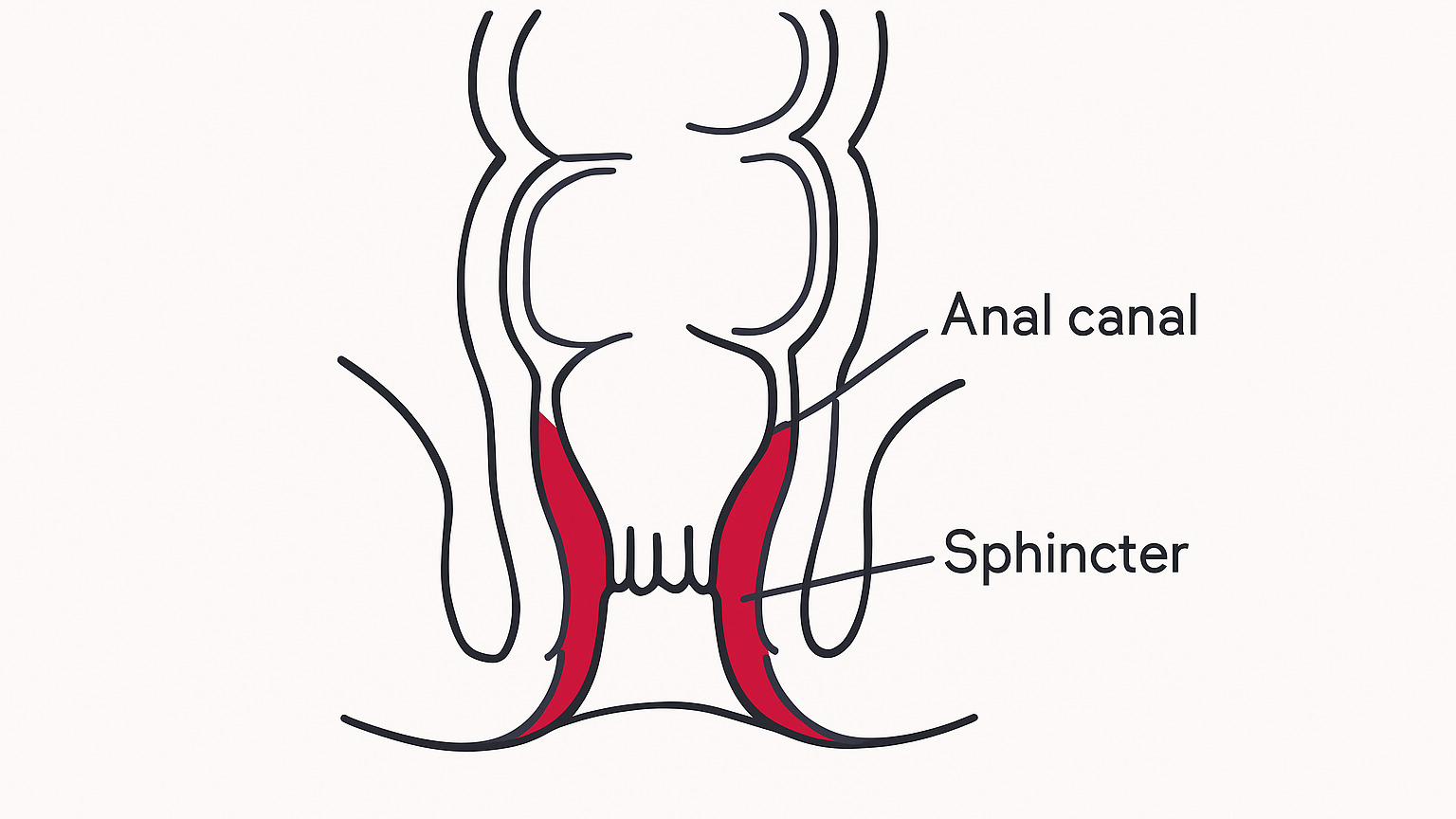
The sphincters and surrounding pelvic floor are muscles, and a long session stretches them beyond their usual range. The result is a dull ache rather than a raw sting, sometimes with a feeling of heaviness or a mild spasm. It behaves like any other muscle strain and settles in a few days with warmth and rest.
Products causing irritation
Frequently underestimated. High-osmolality lubricants draw water out of the cells lining the rectum and leave people sore afterwards without any obvious tear. Soap, shower gel, perfumed wet wipes, warming or flavoured lubricants, and condoms with spermicide all cause irritation in some people. If soreness follows every session regardless of how gentle it was, the product is the first thing to change.
When does it suggest a fissure?
If the soreness has become a sharp tearing pain at the moment of opening your bowels, in the same place each time, with bright blood on the paper and an ache lasting hours afterwards, that is a fissure rather than general soreness. It needs a few weeks without receptive sex, softer stools and warm baths to heal, and it will not resolve if it keeps being reopened.
When does it suggest infection?
Soreness that persists beyond a few days, gets worse, or comes with discharge, a persistent urge to open your bowels, fever, blood or visible sores points towards proctitis. Gonorrhoea, chlamydia, lymphogranuloma venereum, herpes and mpox all cause it, and the treatments differ. This needs a rectal swab within the week rather than more lubricant.
What speeds recovery?
Warm baths for ten to fifteen minutes once or twice a day genuinely help, by relaxing the sphincter and improving blood flow. Keep stools soft with fibre and water so passing them does not reopen anything. Leave the area alone rather than cleaning it with soap or wipes. Avoid receptive sex until it has settled, which usually means a few days rather than weeks.
Does it mean you should do less?
Not necessarily, but recovery time matters. Repeated sessions without letting the lining heal is how minor soreness becomes a chronic fissure. If you are bottoming several times a week and permanently sore, spacing things out, using considerably more lubricant and switching to a low-osmolality product usually resolves it.
When to get seen
Book a clinic appointment for soreness lasting more than a week, any discharge, bleeding beyond a streak, or pain that is worsening. Seek same-day care for severe abdominal pain, fever, heavy bleeding or an inability to pass wind, which can indicate a perforation and is an emergency rather than a soreness question.
Does the receptive partner always feel it more?
Not necessarily, and soreness on the insertive side is worth mentioning too. Friction burns on the shaft, a torn frenulum and irritation under the foreskin all follow from the same causes: not enough lubricant and too long a session. The treatment is the same, which is to leave it alone, keep it clean with water only, and use considerably more lubricant next time.
Is there anything worth applying?
Very little. A plain barrier ointment can protect sore skin at the anal margin, and warm baths help more than any cream. Avoid anaesthetic gels, antiseptics, steroid creams not prescribed for you, and anything perfumed. Most soreness resolves faster when nothing is being put on it.
When soreness becomes a pattern
Persistent soreness after every session, regardless of care, is worth a clinic appointment rather than continued adjustment at home.