Douching is common and carries real risks, most of which scale with how much water you use, how much pressure you use and how often you do it. It is not something to be moralised about, but the harms are well documented and worth understanding, because the difference between occasional careful douching and daily aggressive douching is substantial.
What are the actual risks?
Three matter. Douching strips the mucus layer that protects the rectal lining, and that layer is a genuine barrier against infection. It causes microscopic damage to the epithelium, particularly with high pressure or repeated use. And several studies have found an association between frequent douching and higher rates of HIV and other sexually transmitted infections, which is thought to reflect both of those mechanisms. Large volumes of plain water can also disturb the body's electrolyte balance, and rare cases of serious illness have been reported after very large volume douching.
How much water is too much?
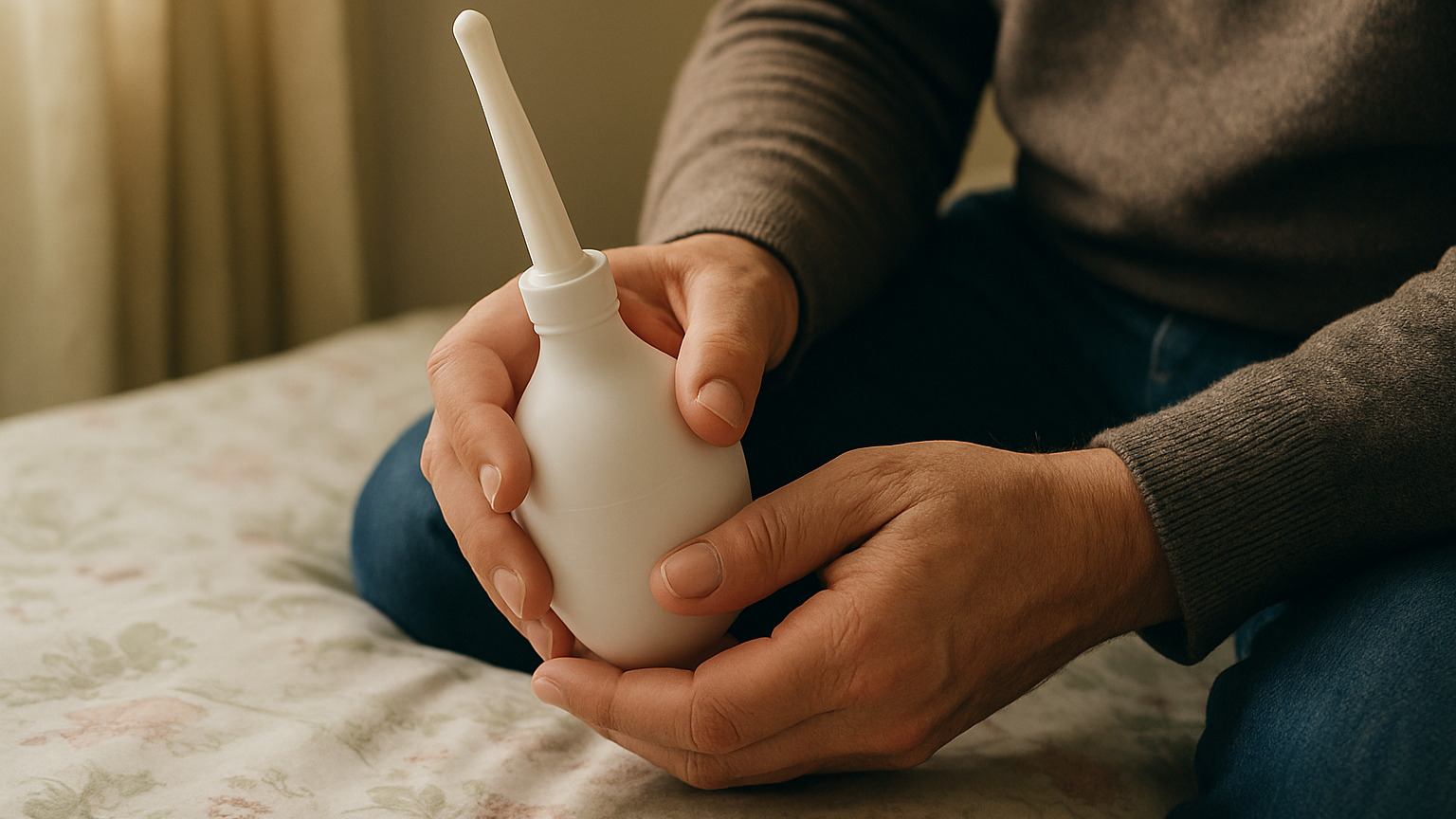
Less than most people use. Water only needs to reach the lower part of the rectum, which is a matter of a few hundred millilitres at most, not litres. A small bulb syringe holding around two hundred millilitres, used once or twice, is sufficient for most people. Shower attachments deliver far more water at far higher pressure and are the setup most associated with injury and with water travelling much further up than intended.
What should you use?
Lukewarm plain water is adequate, though isotonic saline is gentler on the lining because it matches the body's own salt concentration. Making saline is straightforward: roughly a level teaspoon of salt to a litre of previously boiled and cooled water. Never use soap, shower gel, hydrogen peroxide, vinegar or anything marketed as a cleansing solution, all of which irritate and damage the lining. Do not use very hot or very cold water.
How often is too often?
Daily douching is the pattern most consistently associated with harm. Once before sex, on the days you are having sex, is a reasonable ceiling. Douching as a routine hygiene practice, rather than as preparation, is where people get into trouble, and it is worth naming that the rectum is not dirty and does not require cleaning out to be healthy.
How long before sex?
Leave at least an hour or two between douching and sex where you can. Douching immediately beforehand leaves the lining freshly stripped and irritated at exactly the moment it is exposed, and there is often residual water that emerges later anyway. Finishing early also gives you time to notice if anything has been aggravated.
Does it affect testing?
Yes. Do not douche before taking a rectal swab, since it washes away the cells and organisms the test is looking for and can produce a false negative. Take swabs on a day you have not douched.
What are the alternatives?
Timing sex a few hours after opening your bowels, eating enough fibre so stools are well formed, and simply washing the outside are enough for most people most of the time. Plenty of men who bottom regularly do not douche at all. Accidents are less common than anxiety about them suggests, and a towel and a shared sense of proportion handle the occasional one.
When to stop and get checked
Pain during douching, bleeding afterwards, or persistent discomfort mean stopping and being seen. Severe abdominal pain, fever or an inability to pass wind after high-pressure douching needs same-day assessment, since perforation is rare but serious.
What equipment is least risky?
A simple bulb syringe is the safest option because it limits both volume and pressure by design. Shower attachments are the highest risk setup, since the flow rate is far beyond what the rectum is meant to take and it is easy to send water well past the sigmoid colon without realising. If you already use one, fitting a flow restrictor and running it at the lowest pressure that works is a meaningful improvement over stopping entirely, which most people will not do.
What about enema products from a pharmacy?
Micro-enemas and phosphate enemas are medicines intended for constipation, not preparation for sex. Repeated use can disturb electrolytes and irritate the lining, and phosphate enemas in particular have caused serious problems when used more often than directed. They are not a substitute for plain water or saline in this context.
The honest summary
Occasional low-volume douching with saline, well before sex, is a reasonable compromise. Daily high-pressure douching is where the harms sit.