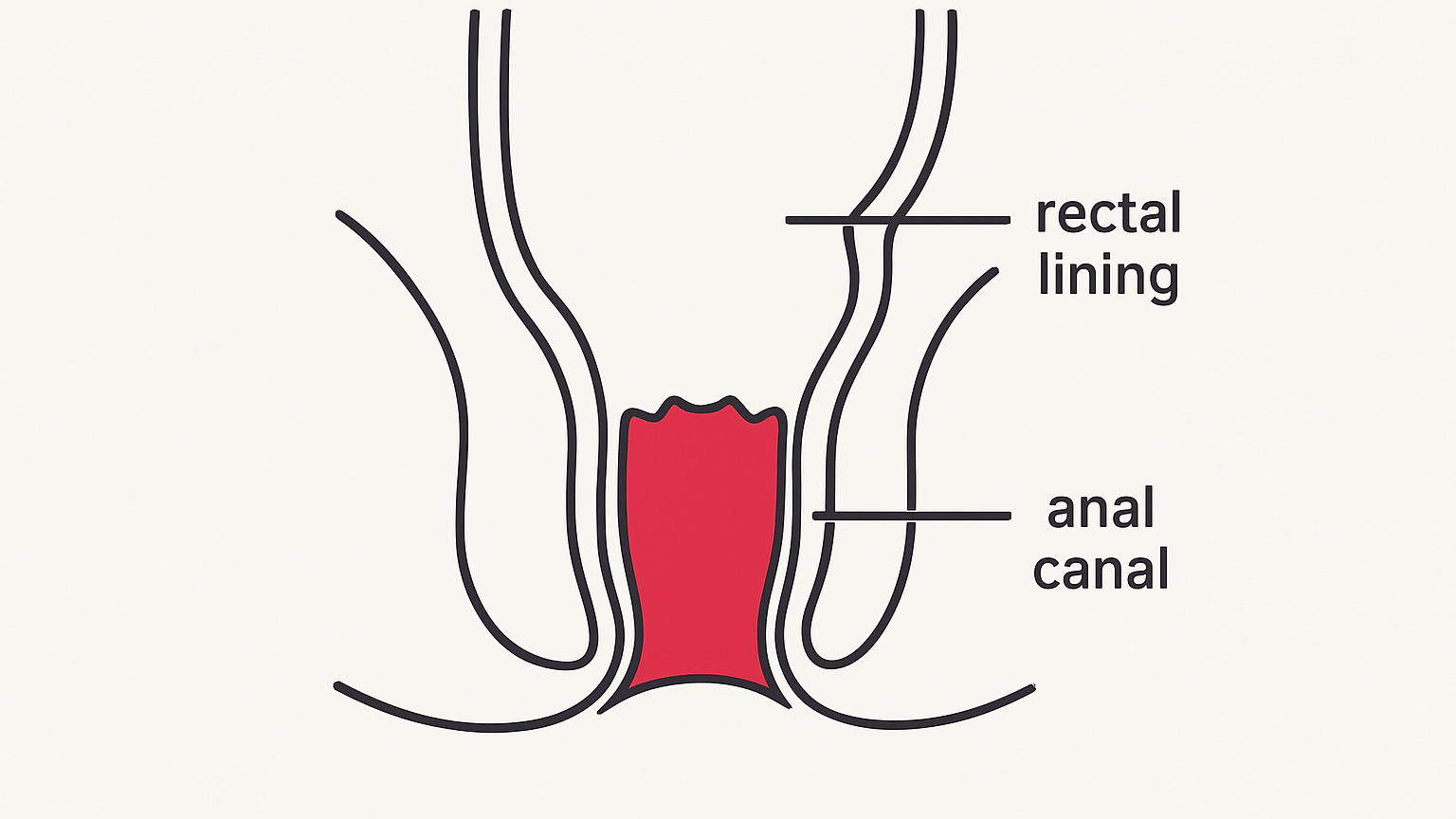
An anal fissure is a small tear in the lining at the anal opening. It produces a sharp, tearing pain when you open your bowels, often described as passing glass, followed by an ache that can last for hours, with a small amount of bright red blood on the paper. Most heal within a few weeks if the conditions are right, and the conditions are more specific than people assume.
Why do they become chronic?
A fissure hurts, the pain makes the internal sphincter spasm, the spasm reduces blood flow to the area, and reduced blood flow prevents healing. That cycle is why a tear that would heal anywhere else on the body can persist for months at the anus. Everything in the treatment is aimed at breaking it: softer stools so the tear is not reopened, warmth and relaxation to reduce spasm, and sometimes a prescribed ointment that relaxes the muscle directly.
Softening stools
This is the most important part and the one people skip. Increase fibre gradually through wholegrains, fruit, vegetables, beans and lentils, and increase water at the same time, since fibre without fluid makes things worse. A bulk-forming supplement such as ispaghula husk, available from any pharmacy, is a reasonable addition. The target is a stool that passes without straining, and if that is not happening within a few days, ask a pharmacist about a stool softener.
Warm baths
Sitting in a warm bath, or a shallow sitz bath, for ten to fifteen minutes once or twice a day relaxes the sphincter and increases blood flow to the area. It is one of the few home measures with a genuine physiological rationale rather than just being soothing. Do it after opening your bowels where you can.
What to avoid
Do not strain or sit on the toilet for long periods reading your phone, both of which increase pressure on the area. Avoid soap and shower gel directly on the anus, which strips the skin and delays healing. Wet wipes, particularly perfumed ones, are a common cause of irritation and are worth stopping entirely. Do not use over-the-counter haemorrhoid preparations expecting them to treat a fissure, since the problem is different.
Should you stop having receptive sex?
Yes, for the healing period, which typically means a few weeks. This is the single most common reason fissures do not resolve. Continuing reopens the tear each time and resets the clock. Insertive sex is unaffected, and there is plenty else available in the meantime.
When is a prescription needed?
If a fissure has not improved within a couple of weeks of doing all of the above, see a GP or sexual health clinic. The usual next step is a topical ointment containing glyceryl trinitrate or diltiazem, applied to the anus, which relaxes the internal sphincter and improves blood flow. GTN commonly causes headaches, which is worth knowing in advance since people often stop using it for that reason. Courses run six to eight weeks and should not be abandoned early.
What if it still does not heal?
A fissure lasting more than six weeks is classed as chronic and warrants referral. Options include botulinum toxin injection to relax the sphincter and, rarely, a small surgical procedure. Persistent fissures that are not in the usual position, or that come with other symptoms, are also investigated to rule out other causes including infection and inflammatory bowel disease.
When to be seen sooner
Get checked promptly rather than waiting if there is significant bleeding, discharge, fever, severe pain, or if you have had condomless receptive sex recently, since proctitis from gonorrhoea, chlamydia or herpes can mimic a fissure and needs a swab rather than fibre.
How long should healing take?
An acute fissure that is being managed properly usually improves noticeably within one to two weeks and heals within four to six. If nothing has changed after two weeks of soft stools, warm baths and no receptive sex, that is the point to seek a prescription rather than to keep waiting.
What makes recurrence likely?
Returning to receptive sex too early, letting constipation return once the pain settles, and using wipes or soap on the area. Fissures recur readily in the same spot because the scar tissue is less elastic than the surrounding lining, so the habits that helped it heal are worth keeping for a while after it has.