Pelvic floor exercises are usually presented as strengthening, and for anal sex the more useful half is often the opposite. Being able to consciously relax the pelvic floor makes receptive sex more comfortable, and being able to contract it protects continence as you get older. Both are trainable, and the exercises take a few minutes a day.
What is the pelvic floor?
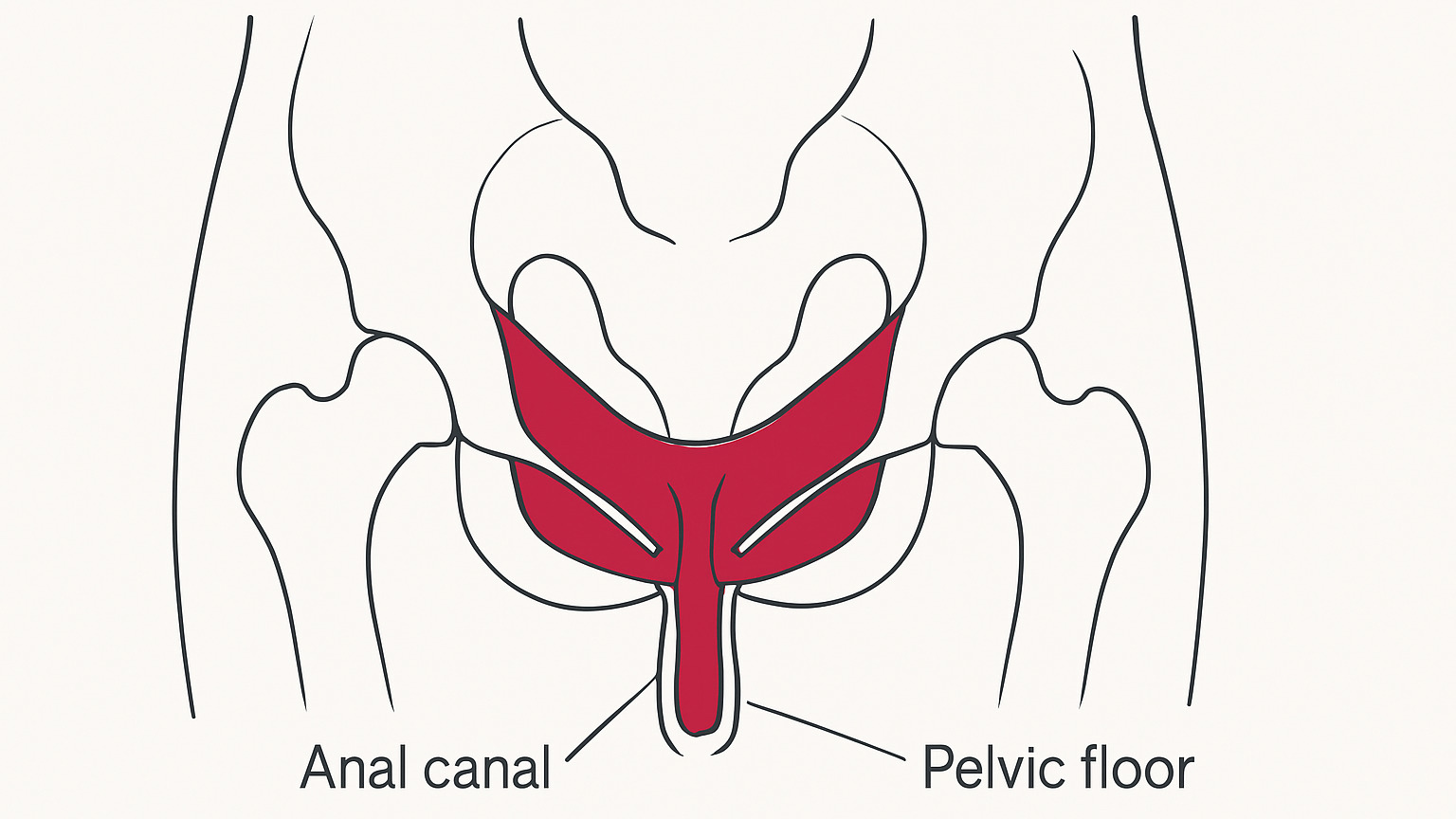
A sling of muscle running from the pubic bone to the tailbone, supporting the bladder and bowel and including the external anal sphincter and the puborectalis muscle. The external sphincter is under conscious control. The internal sphincter is not, but it responds to how tense the rest of you is, which is why relaxation training has an effect on something you cannot directly command.
Finding the right muscles
The standard method is to imagine stopping yourself passing wind, and squeezing without clenching your buttocks, thighs or stomach. You should feel a lift and tightening around the anus. If your whole body tenses, you are recruiting the wrong muscles. Doing this once while briefly interrupting the flow of urine helps identify the sensation, though it should not be used as the exercise itself.
The strengthening routine
A common approach is ten slow contractions held for a few seconds each with equal rest between, followed by ten quick contractions, done two or three times a day. Build the hold time gradually. It takes weeks rather than days to notice a difference, which is the main reason people abandon it. Attaching it to something you already do daily makes it stick.
The relaxation half
Equally important and rarely taught. After each contraction, deliberately let go further than feels natural and hold that release for several seconds. Diaphragmatic breathing helps: as you breathe out slowly, let the pelvic floor drop. This trains the ability to release on demand, which is exactly what makes entry easier during receptive sex, where the obstacle is usually involuntary tightening rather than a lack of strength.
What if everything is already too tight?
Some people have an overactive pelvic floor rather than a weak one, and for them strengthening exercises make things worse. Signs include persistent pelvic or rectal aching, pain during receptive sex that has no visible cause, difficulty starting to urinate, and a sensation of constant tension. If that describes you, focus on relaxation, breathing and warm baths, and ask a GP about referral to a pelvic health physiotherapist rather than doing more contractions.
What does it change in practice?
Better conscious relaxation makes entry more comfortable and reduces the tension that causes pain and small tears. Better strength and endurance help maintain continence as you age, and are useful if you have any urgency or difficulty controlling wind. Some people also report greater sensation, though the evidence for that is anecdotal rather than measured.
Is a professional worth seeing?
Pelvic health physiotherapy is genuinely effective and available on the NHS with a GP referral, though waits vary. It is worth pursuing if you have pain, incontinence symptoms or persistent difficulty with receptive sex. You do not need to explain your sex life in detail to be referred; describing the symptom is enough, though a physiotherapist who knows the context can tailor the work better.
How long until it helps?
Most people notice a difference within six to twelve weeks of consistent daily practice, with the relaxation element often improving sooner than strength. It is dull and it works, which describes most useful exercise.
Common mistakes
Holding your breath during contractions, squeezing the buttocks and thighs instead of the pelvic floor, doing them only occasionally, and pushing down rather than lifting up are the four that come up most. If you cannot tell whether you are doing it correctly, inserting a lubricated finger and feeling for the squeeze settles it in a few seconds.
How does this interact with pain during sex?
If entry is painful and no fissure or infection is found, an overactive pelvic floor is one of the more common explanations and one of the most treatable. Relaxation work, breathing and physiotherapy address it directly, whereas more lubricant and more patience alone often do not.
Worth doing anyway
Pelvic floor conditioning supports bladder and bowel control regardless of your sex life, and the case for doing it strengthens with age. It requires no equipment and can be done anywhere without anyone noticing.