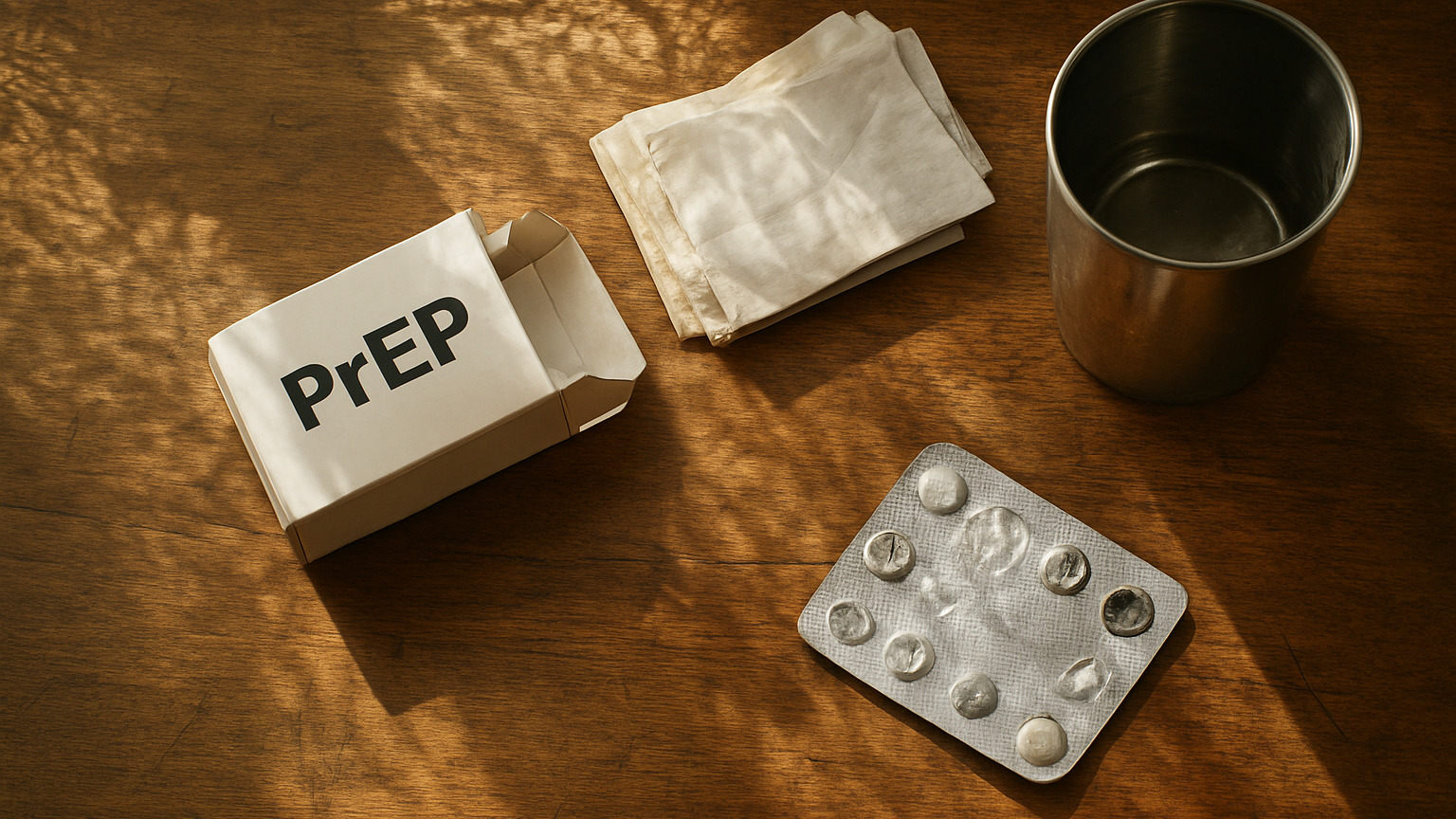
Treatment as prevention and PrEP are often mentioned together and are frequently confused. They use overlapping drugs and achieve a similar outcome, but they are taken by different people for different reasons and they work from opposite ends of the same problem.
Who takes what?
Treatment as prevention describes what happens when someone living with HIV takes antiretroviral treatment: their viral load becomes undetectable and they can no longer transmit the virus sexually. PrEP is taken by someone who does not have HIV, to prevent them acquiring it. The first removes a source; the second protects a recipient.
Are the drugs the same?
Partly. PrEP in the UK is tenofovir disoproxil with emtricitabine, two drugs from the same class. HIV treatment uses three drugs, or in some modern regimens two, usually built around an integrase inhibitor. Two drugs are enough to prevent an infection establishing but not enough to treat one that already has, which is why an HIV test always precedes a PrEP prescription.
How does the monitoring differ?
PrEP involves three-monthly HIV testing, periodic kidney function checks and a full sexual health screen. HIV treatment involves viral load and CD4 monitoring, kidney and liver function, cholesterol and glucose, and increasingly cardiovascular and bone health as people age with the condition. The PrEP schedule exists to catch a rare event; the treatment schedule manages a long-term condition.
Which is more effective?
Both approach complete protection when working properly. Sustained viral suppression means there is no virus to transmit, which is arguably the more absolute of the two. PrEP depends on the user maintaining drug levels, which introduces adherence as a variable. In practice the difference is academic; the practical question is which applies to you.
Do you need both in a serodifferent couple?
Clinically, no. If the partner living with HIV has a sustained undetectable viral load, transmission cannot occur and PrEP adds nothing. Many people take it anyway, for their other partners, because it removes an intrusive worry, or during the months before suppression is established. That is a personal decision rather than a clinical requirement, and treating it as an accusation makes the conversation harder than it needs to be.
What does each not cover?
Both cover HIV and nothing else. Neither affects gonorrhoea, chlamydia, syphilis, hepatitis, herpes, HPV or mpox. Regular screening and vaccination sit alongside both, and doxy-PEP addresses part of the bacterial gap where it is available.
How do they work together at population level?
Treatment as prevention reduces the amount of transmissible virus circulating in a community, which lowers risk for everyone including people taking no precautions. PrEP protects individuals from whatever transmissible virus remains, particularly from partners with undiagnosed infection. The fall in new diagnoses in the UK reflects both operating alongside expanded testing rather than either alone.
Do they carry the same stigma?
Not equally, and this is worth naming. PrEP attracts judgement about promiscuity, and treatment attracts judgement about having HIV at all. Both are people taking a tablet to prevent an infection, and the difference in how they are received says more about attitudes than about pharmacology.
What about PEP?
A third thing again: a month of treatment-strength medication taken after a possible exposure, within seventy-two hours. It is the emergency option for the situation where neither of the other two was in place, and needing it is usually an indication that PrEP would suit you.
Can one person use both concepts?
Not simultaneously, since PrEP is for people who are HIV negative. Someone who takes PrEP and later acquires HIV moves from one to the other, and the transition matters: two drugs are inadequate treatment, so continuing PrEP with undiagnosed HIV risks resistance. This is the entire reason for three-monthly HIV testing on PrEP.
Which is cheaper for the health service?
Treatment is provided because people need it regardless, so its prevention benefit comes without additional cost. PrEP is an additional intervention, and generic pricing has made it considerably cheaper than it was. Both are free to the person using them.