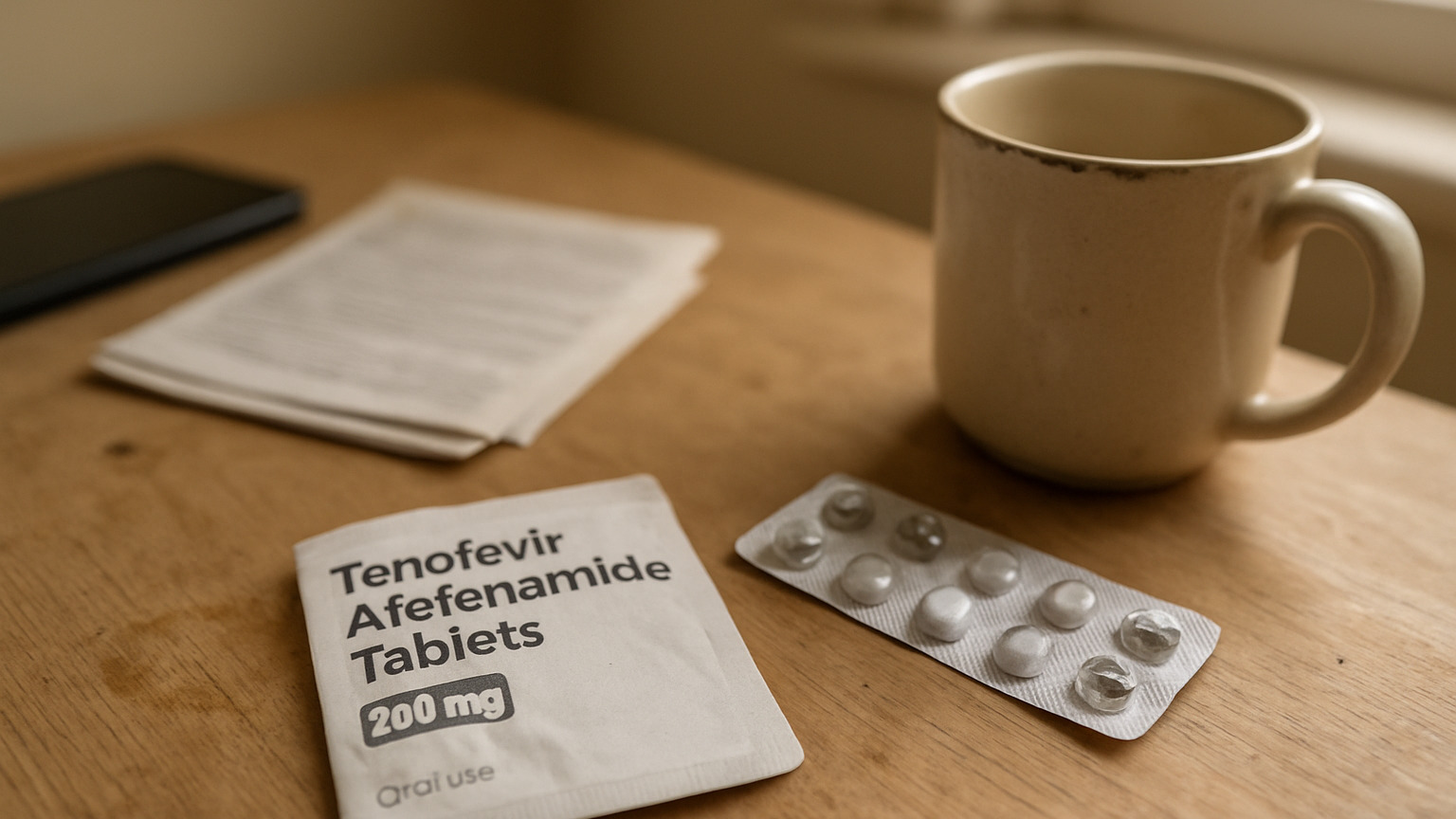
Tenofovir alafenamide has more interactions than the older tenofovir, because it is a substrate for transporters and enzymes that other drugs affect. Most are manageable and a small number are absolute.
Why does it interact more?
Because it is carried by transport proteins and partly handled by the enzyme CYP3A. Drugs that induce or inhibit these change how much alafenamide reaches the cells. The older tenofovir is cleared largely unchanged by the kidneys and bypasses most of this.
Which drugs reduce its levels?
Strong enzyme inducers. Rifampicin and rifapentine, used for tuberculosis, reduce it substantially and are generally contraindicated. Anticonvulsants including carbamazepine, phenytoin and phenobarbital do the same, as does St John's wort. In these situations a different regimen is usually needed.
Why does that matter?
Because reduced levels mean inadequate suppression, and inadequate suppression is how resistance develops. This is not a tolerability issue to be monitored but a reason to change the regimen, and it should be raised before any new medicine is started.
Which drugs raise its levels?
Boosters, chiefly ritonavir and cobicistat. This is anticipated rather than problematic: where a combination contains a booster, the alafenamide dose is reduced to 10mg to compensate. It is why the same drug appears at different strengths in different products.
Does it interact with hormone therapy?
No, in either direction. Alafenamide does not affect oestradiol or testosterone levels, and gender-affirming hormone therapy does not reduce its effectiveness. Other components of a combination tablet may differ, so it is worth checking the whole regimen rather than one part.
What about recreational drugs?
Alafenamide itself has no significant interaction. The important caveat is that if your combination tablet contains cobicistat, that booster raises levels of MDMA, methamphetamine, mephedrone and ketamine substantially, which has caused deaths. Check which regimen you are on rather than assuming.
What about anti-inflammatory painkillers?
Less of a concern than with the older tenofovir, since much less tenofovir circulates and reaches the kidneys. Regular use is still worth mentioning, particularly if you have any existing kidney issue.
What about hepatitis C treatment?
Some direct-acting antivirals raise tenofovir levels, and the picture differs between the two forms. Hepatitis C treatment is short and highly effective, and any adjustment is temporary. Both teams should know what the other is prescribing.
What about antacids and supplements?
Alafenamide itself is not bound by calcium, magnesium, iron or zinc. If your tablet contains an integrase inhibitor such as bictegravir, those minerals do matter and need spacing. Again, this is about the whole tablet rather than the tenofovir component.
What about alcohol?
No direct interaction. The practical issues are missed doses and vomiting. If you vomit within an hour of a dose, take another. Heavy drinking matters more where hepatitis B or C is also present.
How do you check a combination?
The University of Liverpool interaction checker covers antiretrovirals against prescription, over-the-counter and recreational drugs, and is what clinicians use. A clinic pharmacist will check without an appointment in a couple of minutes, which is quicker than any other route.
What about medicines prescribed elsewhere?
Tell whoever prescribes. GPs, dentists and hospital teams do not see your HIV record unless you have consented, so the responsibility for mentioning it sits with you. Carrying a photograph of your tablet packaging makes this easier.
Does it affect contraception?
Not directly. Where a combination contains a booster such as cobicistat, that component can affect hormonal contraception, so the answer depends on the whole tablet rather than the tenofovir in it.
What about things you would not think of as medicines?
Herbal remedies, particularly St John's wort, high-dose supplements, and products bought online all count. So do medicines prescribed by a dentist or a hospital team who cannot see your sexual health record. If you swallow it, inject it or apply it regularly, mention it.
What happens if an interaction is found?
Usually an adjustment rather than a crisis: a dose change, a different drug in the same class, or spacing the two apart. Genuine contraindications are a small minority, and they are almost always solvable by changing one of the two medicines.