The wrong lubricant destroys a condom faster than friction does. Oil-based products degrade latex within minutes, and because the failure happens silently rather than dramatically, people frequently attribute the resulting break to bad luck or a faulty product.
What counts as oil-based?
More than people realise. Petroleum jelly, baby oil, massage oil, coconut oil, olive oil, butter, body lotion, moisturiser, hand cream, sun cream and many hair products all contain oils that break down latex. Anything greasy that is not sold specifically as a personal lubricant should be assumed to be incompatible.
Which condoms tolerate oil?
Polyurethane only. Latex and polyisoprene are both degraded by it. If you use oil-based products, polyurethane condoms are the compatible option, though they are less elastic and fit matters more. Nitrile gloves are also oil-compatible, unlike latex ones.
What should you use instead?
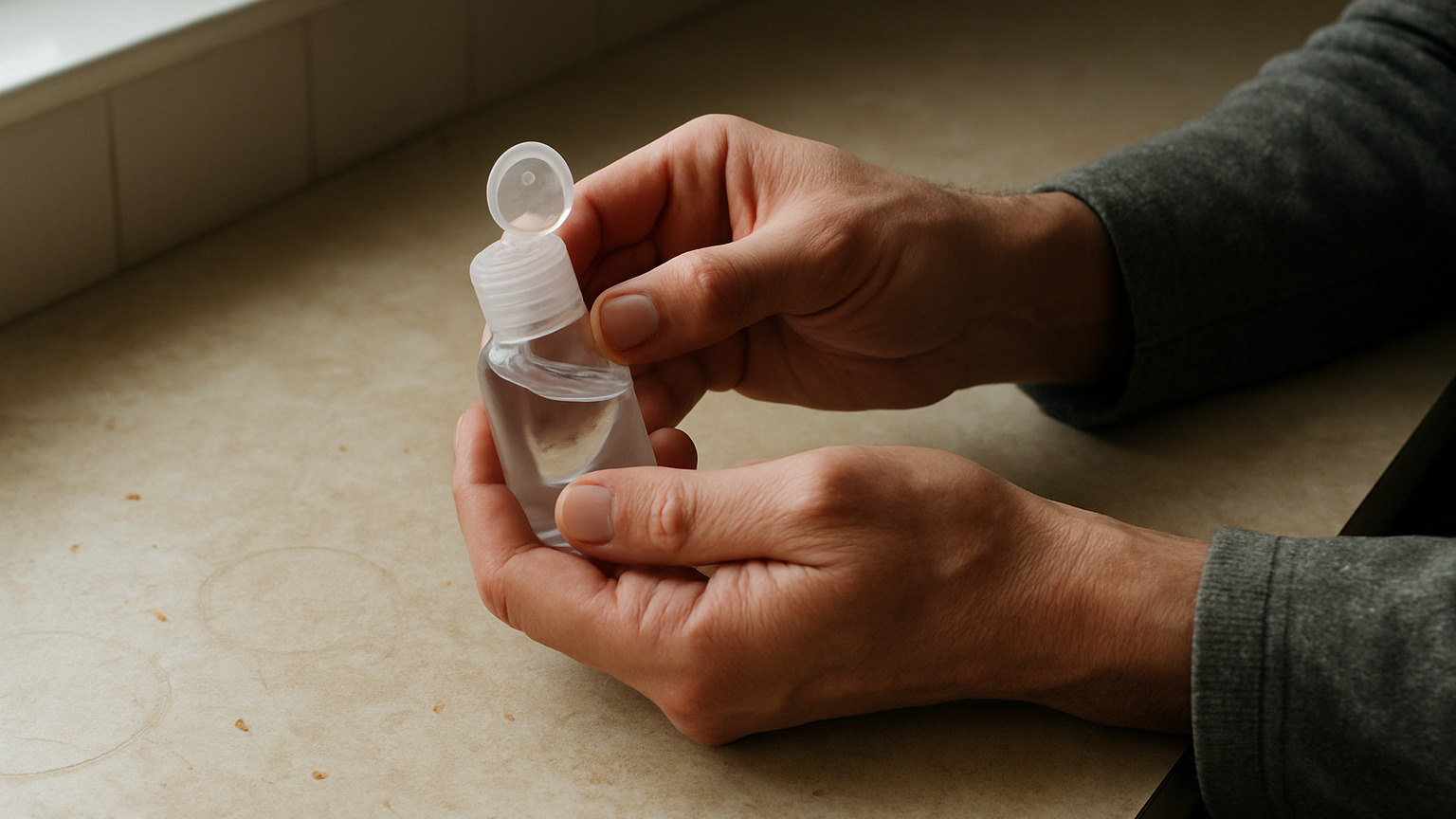
Water-based lubricant is compatible with every condom material and every toy material, washes off easily, and is the safest default. Silicone lubricant is compatible with every condom material, lasts far longer and does not dry out, but degrades silicone toys, leaving the surface tacky and damaged.
How much do you need?
More than most people use, and reapplied during rather than only at the start. The rectum produces no lubrication of its own, so all of it has to be added, and insufficient lubricant is the single leading cause of condom breakage. Water-based products dry out over a long session, which is when they need topping up rather than when the session is over.
Does the formulation matter beyond compatibility?
Yes. Highly concentrated lubricants draw water out of the cells lining the rectum and damage the surface layer, which in laboratory studies increases susceptibility to infection. This property is called osmolality, and many popular products score badly on it, usually because of high glycerin or propylene glycol content. Products marketed as isotonic or low osmolality are formulated with this in mind and are worth seeking out if you bottom frequently.
What should you avoid entirely?
Anything containing nonoxynol-9, a spermicide once added to lubricants and condoms, which damages the rectal lining and has been shown to increase rather than reduce HIV risk. Anything with a numbing agent such as benzocaine or lidocaine, since pain is what prevents injury. Warming, tingling and flavoured products, which are frequently irritating and are formulated for other purposes.
What about saliva?
Not adequate. It dries within moments, provides almost no lasting slip, and is a recognised route for transmitting gonorrhoea from the throat. Using it because nothing else is within reach is a common cause of soreness and small tears, and keeping a bottle by the bed removes the situation.
Does lubricant affect anything else?
It does not interact with PrEP or HIV treatment. It should not be used on a rectal swab, since some formulations interfere with laboratory assays, which is why swabs are taken without it.
What about lubricant already inside the condom packet?
Silicone-based on most brands and compatible with the condom by definition, since manufacturers match them. It becomes a consideration only if you also use silicone toys, where any silicone lubricant transferred can degrade the surface. Putting a condom on the toy solves both problems at once.
The simple rule
Water-based or silicone with latex and polyisoprene. Anything with polyurethane. Water-based with silicone toys. Nothing from the kitchen or bathroom cabinet.
What about lubricated condoms?
The lubricant already on a condom is compatible with it but is nowhere near enough for anal sex. Treat it as a starting point rather than a supply, and add plenty more.
Does it matter for gloves and toys?
Yes. Oil destroys latex gloves but not nitrile ones. Silicone lubricant degrades silicone toys, leaving a tacky surface. Water-based is the safe default across every combination, which is why it is the one worth having by default.
How much should you buy?
More than sachets. Running out partway through is the situation that leads to improvising with something from the bathroom cabinet, which is exactly the failure this article is about.