Sexual health testing is site-specific. Each site you use for sex needs its own sample, and an infection at one site tells you nothing about another. This is where care for trans people most often falls short, because the sites tested get decided by assumption rather than by asking.
What sites might need testing?
Throat, rectum, urethra, and a front hole or neovagina where either is used for sex. Most people need three or four of these. A urine sample alone, which is what a lot of people are offered by default, misses the majority of gonorrhoea and chlamydia in anyone having anal or oral sex.
How do you make sure the right ones are taken?
Say plainly which sites you use. I have oral, anal and frontal sex and I would like all four sites swabbed is a complete sentence and removes the guesswork. Clinicians are choosing swabs rather than forming an opinion, and being told directly is easier for both of you.
Can you take the samples yourself?
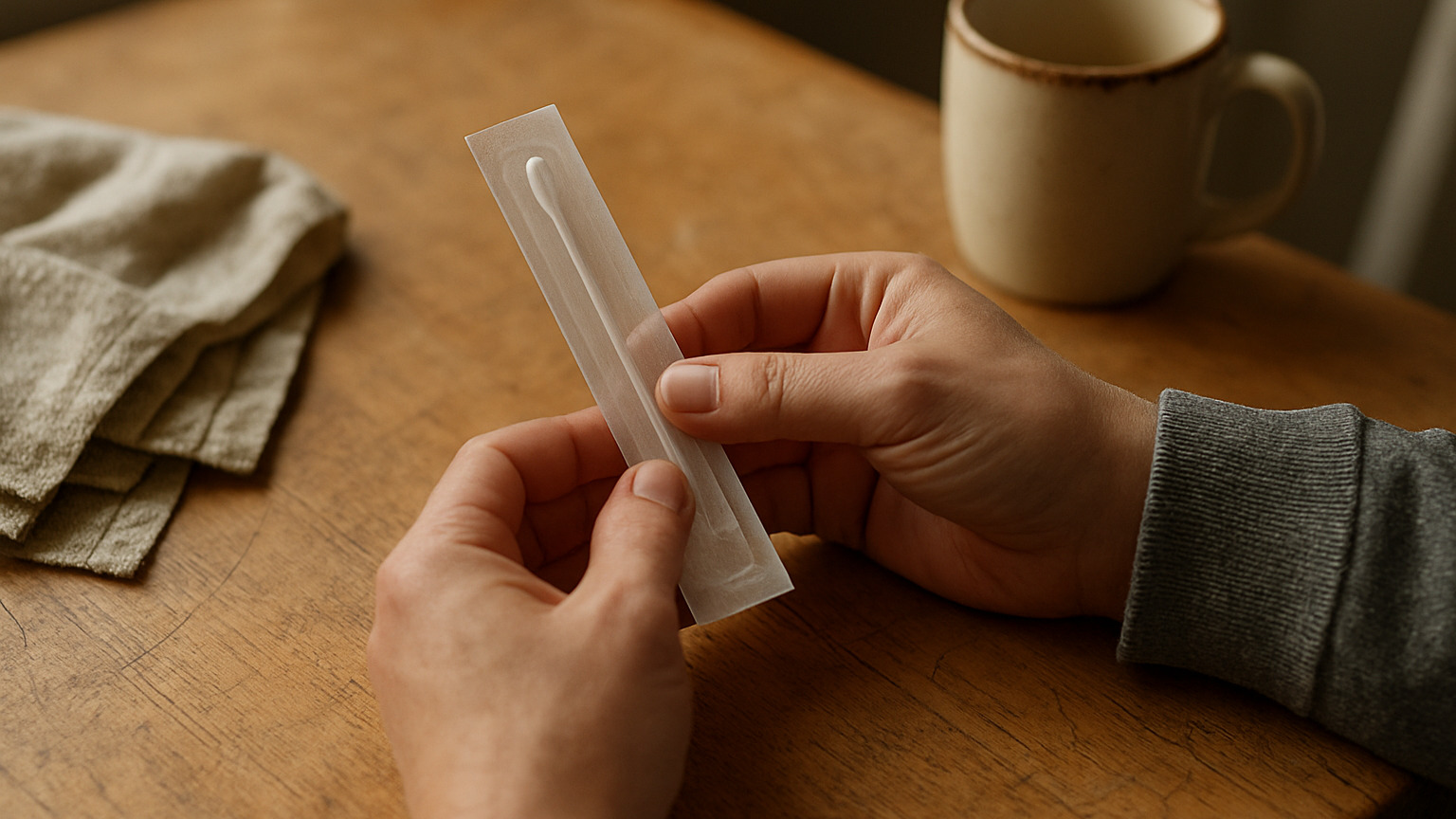
Almost always, and it is worth asking for. Self-taken swabs are as accurate as clinician-taken ones for chlamydia and gonorrhoea at every site, and most services offer them as standard. If being examined is something you would rather avoid, this removes it entirely.
What about blood tests?
HIV and syphilis at minimum, hepatitis B status if you are not vaccinated, and hepatitis C if there is any injecting, fisting or bleeding involved. These are taken once regardless of how many sites are swabbed.
What are the window periods?
Two weeks for chlamydia and gonorrhoea. Forty-five days for a fourth-generation laboratory HIV test. Twelve weeks for syphilis, and for hepatitis B and C antibodies. Testing earlier than these can miss something, and anything before the window closes needs repeating.
How often?
Every three months if you have condomless sex with new partners, which is also the schedule that comes with a PrEP prescription. Annually otherwise. More often if you attend group events or have a specific exposure.
Can you use a postal kit?
For routine screening, yes, and free kits are available in most areas. Check the kit covers the sites you need, since some default to urine and bloods only and require you to select the others. If you have symptoms, need treatment, or are within the seventy-two hour PEP window, go to a clinic instead.
What about cervical screening?
An entirely separate programme from sexual health screening, and a common gap. If you have a cervix and are registered male with your GP, you will not be invited automatically and need to request it. It is worth raising specifically rather than assuming a sexual health screen has covered it.
What about after surgery?
A neovagina should be swabbed if used for sex, and infections do occur there. After phalloplasty or metoidioplasty with urethral lengthening, a urine sample covers the urethra. Tell the clinic what surgery you have had so the right sites are sampled.
What if a service pushes back?
Ask for the swab anyway. Clinicians unfamiliar with trans patients occasionally decline sites they have not been asked for before, and being clear usually resolves it. Sexual health services are open access, so another clinic will see you without a referral if it does not.
Does testing hurt?
Swabs are brief and are more uncomfortable than painful. Where frontal atrophy from testosterone makes it difficult, a self-taken swab, a smaller instrument or a course of topical oestrogen beforehand all help, and any of those is reasonable to ask for.
What do results look like?
Usually a text within a few days saying whether anything needs following up. Ask how they will contact you and check the number they hold is right, since a missed result is the commonest reason treatment gets delayed.